Low carb avocado recipes are useful when you want a meal with creamy texture, fresh flavor, and a satisfying amount of fat without relying on grains or sugary sauces. Avocado can be mashed into a spread, sliced into a salad, blended into a dressing, folded into eggs, or used as a finishing ingredient for fish and meat. It is flexible enough for breakfast, lunch, dinner, and snacks, but its energy density makes portion awareness important.
This guide focuses on practical ways to use avocado in a lower-carbohydrate routine. It covers how to choose and store avocados, several complete recipe ideas, texture and flavor pairings, substitutions, nutrition and portion planning, meal preparation, and common problems such as browning or watery salads. The aim is to preserve the fresh taste of avocado while making the recipes easy to repeat.
Why avocado works in low-carb meals
Avocado contributes fiber and a creamy texture while adding relatively little digestible carbohydrate compared with many starchy side dishes. Its mild flavor accepts acid, herbs, chili, garlic, onion, seafood, poultry, eggs, and cheese. That makes it a useful bridge between ingredients that might otherwise need a starch or a heavy sauce to feel complete.
The most important distinction is between carbohydrate and calories. Avocado can fit a low-carb or keto pattern, but it is not a free food. A whole avocado can add a substantial amount of energy, and toppings such as olive oil, mayonnaise, cheese, nuts, and seeds can increase the total further. Use the portion that fits the rest of your meal instead of assuming that a low-carb ingredient can be eaten without limits.
Avocado is also a good way to improve texture when a meal uses lean protein or crisp vegetables. A measured spoonful can replace part of a creamy dressing, while slices can provide richness beside eggs or grilled meat. If you need a lighter meal, combine avocado with plenty of vegetables and a lean protein rather than adding several rich ingredients at once.
How to choose and store avocados
- Choose an avocado that yields slightly to gentle pressure but is not soft or dented.
- The skin should be intact without large sunken spots or leaking areas.
- If the avocado is firm, leave it at room temperature until it ripens.
- Once ripe, refrigerate it to slow further softening.
- After cutting, press plastic wrap or a reusable cover directly against the cut surface and add lemon or lime if appropriate.
Color alone is not a reliable ripeness test because different varieties have different skin patterns. When buying several avocados, select a mix of firm and nearly ripe fruit so they do not all become soft on the same day. If an avocado is slightly underripe, dice it into a warm dish where it can soften gently. Very hard pieces are less pleasant in a salad or spread.
To reduce browning, limit exposure to air. Acid slows discoloration, but it does not preserve the avocado indefinitely. Use cut avocado promptly and discard it if it develops an off smell, slimy texture, or unusual discoloration beyond normal surface browning.
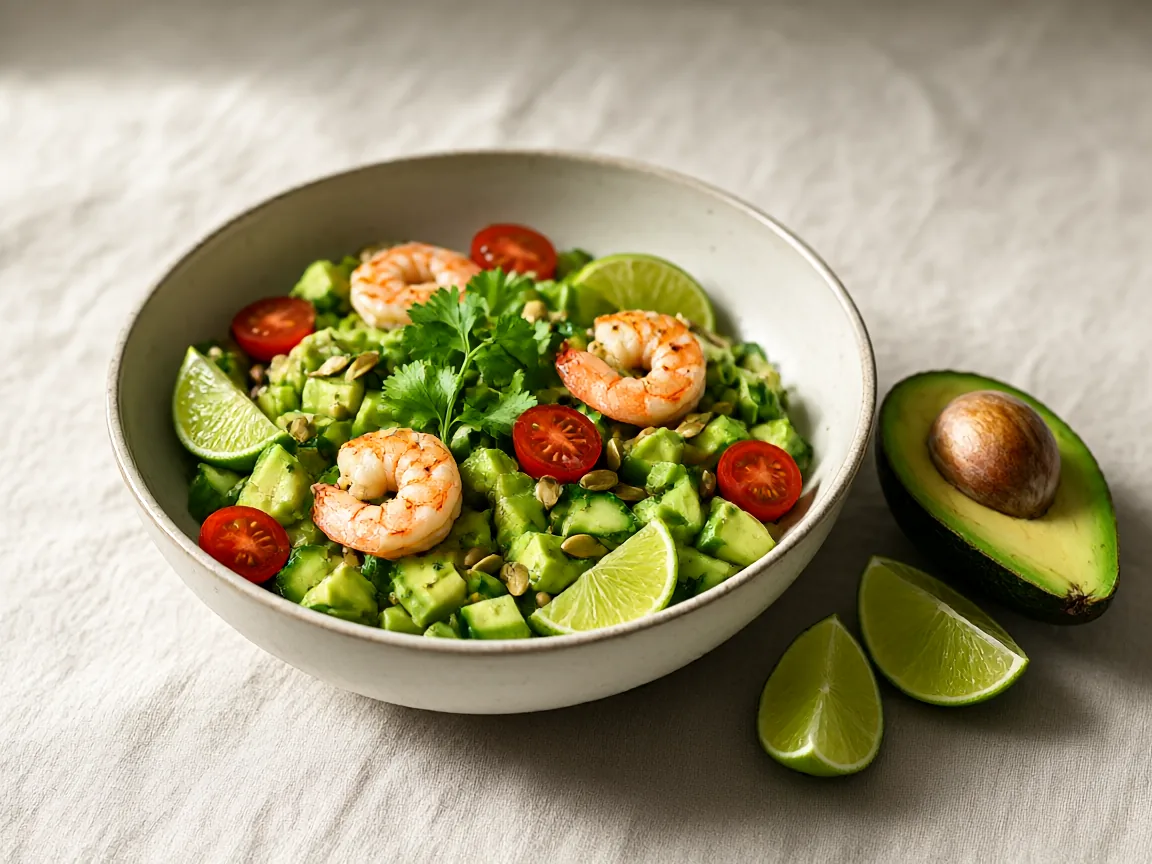
Recipe 1: Avocado cucumber shrimp bowl
For two servings, prepare one medium avocado, one large cucumber, eight to twelve ounces of cooked shrimp, a handful of cilantro, two scallions, and lime. Cut the cucumber into half-moons and the avocado into bite-sized pieces. Toss the shrimp and vegetables with lime juice, a small amount of olive oil, salt, pepper, and optional chili flakes.
Add the avocado last and fold gently so the pieces remain intact. If you plan to prepare the salad ahead of time, store the avocado separately and mix it in just before serving. The cucumber provides crispness while the avocado creates a creamy coating without needing a large amount of mayonnaise.
For a more substantial meal, serve the bowl over shredded lettuce or cauliflower rice. If you add pumpkin seeds or chopped nuts, measure them because they add crunch and energy quickly. A little toasted sesame or cilantro can provide more flavor without needing extra oil.
Recipe 2: Avocado egg salad lettuce cups
Mash one avocado with two chopped hard-boiled eggs, one teaspoon of mustard, lemon juice, chopped chives, and black pepper. Add a small amount of Greek yogurt or mayonnaise only if the mixture needs more moisture. Spoon the egg salad into butter lettuce leaves and top with cucumber or radish slices.
The avocado makes it possible to use less mayonnaise while keeping the mixture creamy. Add the lemon gradually because too much acid can overwhelm the eggs. For extra heat, use smoked paprika, jalapeño, or a pinch of cayenne. The lettuce cups are best assembled immediately before eating so the leaves stay crisp.
If you prefer a portable meal, keep the egg and avocado mixture in a sealed container and pack the lettuce separately. Put the filling into the leaves when you are ready to eat. This also prevents moisture from collecting in the container.
Recipe 3: Chicken avocado salad
Use leftover roasted chicken or poached chicken, diced avocado, celery, scallions, and fresh herbs. Make a dressing with lime juice, olive oil, a small amount of Dijon mustard, and pepper. Toss the chicken with the dressing first, then fold in the avocado so it does not become completely mashed.
For a stronger flavor, add cumin, cilantro, or a little smoked paprika. For a cooler profile, use dill and cucumber. If you want more crunch, add a measured amount of sliced almonds or sunflower seeds. The salad can be served on lettuce, stuffed into half a bell pepper, or eaten with cucumber rounds.
Chicken salad is easy to make too rich. Start with a small amount of oil and let the avocado provide much of the creaminess. If the salad seems dry, add lime juice or a spoonful of unsweetened yogurt before adding more fat.
Recipe 4: Avocado salmon plate
Cook a salmon fillet by roasting, pan searing, or air frying. Serve it with sliced avocado, leafy greens, cucumber, and a lemon herb dressing. The salmon and avocado both provide richness, so keep the dressing light: lemon juice, herbs, a measured teaspoon of olive oil, and pepper may be enough.
For a warm plate, place the salmon over sautéed spinach or roasted broccoli and add the avocado after the vegetables are off the heat. Very high heat can soften the avocado too quickly and make it lose its fresh flavor. Add capers, dill, or scallions for contrast.
If you use the air fryer, add avocado only after cooking. The air fryer low-carb recipes collection can help with the protein and vegetable method, while avocado is best treated as a cool finishing ingredient.
Recipe 5: Avocado green goddess dressing
Blend half an avocado with lemon juice, parsley, cilantro, a small garlic clove, water, salt, and pepper. Add unsweetened yogurt or olive oil according to the texture you want. Use more water for a pourable dressing and less for a dip. Taste after blending because avocado can soften sharp flavors.
This dressing works on lettuce, grilled chicken, shrimp, roasted vegetables, or a bowl of cauliflower rice. It can also replace a mayonnaise-based dip. Keep the batch small and store it in a sealed container with minimal air at the surface. The color will gradually darken, but lime or lemon helps slow the change.
For a dairy-free version, use olive oil, water, or unsweetened coconut milk instead of yogurt. For a nutty version, blend in a small amount of tahini, but include it in the nutrition estimate. Do not add so many ingredients that the avocado flavor disappears.
Recipe 6: Avocado breakfast plate
Serve half an avocado with eggs, sautéed greens, and a protein such as smoked salmon, turkey, or leftover chicken. Add lemon, chili flakes, or everything-style seasoning according to your preference. If the avocado portion is large, use one egg and more vegetables; if the portion is smaller, two eggs may create a more filling plate.
For a skillet version, cook mushrooms and spinach first, then add scrambled eggs. Place diced avocado over the eggs after removing the pan from heat. This keeps the avocado creamy rather than hot and oily. A small amount of salsa can add freshness, but check the label for added sugar and portion the salsa.
Recipe 7: Tuna avocado boats
Mix canned tuna with celery, lemon juice, mustard, pepper, and herbs. Spoon the mixture into an avocado half and top with scallions or cucumber. Use plain tuna packed in water or oil according to your preference, and drain it well so the filling does not become watery.
This recipe is quick, but the combination of tuna, avocado, and mayonnaise can become energy-dense. Try using mashed avocado as the main binder and add only enough mayonnaise to adjust the texture. Serve with a large green salad or crunchy vegetables rather than crackers.
Flavor combinations for avocado
- Fresh: lime, cilantro, cucumber, scallion, and jalapeño.
- Mediterranean: lemon, parsley, tomato, feta, olives, and oregano.
- Smoky: paprika, grilled chicken, bacon, chives, and black pepper.
- Seafood: shrimp, salmon, tuna, dill, capers, and lemon.
- Spicy: chili flakes, hot sauce without added sugar, cumin, and garlic.
- Asian-inspired: ginger, tamari, sesame, rice vinegar, and fresh herbs.
Avocado benefits from contrast. Acid keeps it from tasting heavy, crisp vegetables provide texture, and a warm protein makes the meal feel complete. Choose one or two strong accents instead of adding every topping at once. Too many rich ingredients can make a simple avocado dish difficult to portion.
Using avocado in sauces and low-carb meals
Avocado can thicken a dressing without flour or starch. Blend it with water, lemon, herbs, and a measured amount of oil for a creamy sauce. It can also be mashed into a spicy dip with lime, cilantro, and chili. These sauces work well with vegetables, eggs, grilled meat, and fish.
When using avocado in a warm dish, add it at the end. Heat can change its flavor and cause it to lose its firm shape. If a recipe calls for a creamy sauce, blend avocado separately and spoon it onto the finished food. This gives you more control over both temperature and portion.
For a dish with Asian flavors, pair avocado with the measured sauces and vegetables in the low-carb Asian recipes collection. A cool avocado topping can soften chili and salty flavors without requiring rice or noodles.
Substitutions
If you need a replacement for avocado, choose based on its role. Mashed hard-boiled egg, plain Greek yogurt, tahini, or a small amount of mayonnaise can provide creaminess. Cucumber, celery, radish, and cabbage can replace its fresh or crunchy role, but they will not provide the same fat content.
If you cannot use eggs, pair avocado with shrimp, salmon, chicken, tofu, or a bean portion that fits your plan. If you avoid dairy, use olive oil, herbs, and lemon instead of cheese or yogurt. If you avoid nuts, omit seeds and choose toasted spices or fresh herbs for texture and aroma.
For a bread or cracker substitute, serve avocado mixtures with lettuce cups, cucumber slices, bell pepper strips, or a small portion of low-carb bread. The almond meal bread keto guide is one possible option, but portion it alongside the avocado rather than treating both as unlimited.
Nutrition and portion planning
Count the avocado portion, protein, oil, mayonnaise, cheese, nuts, seeds, and dressing. The carbohydrate from avocado is only one part of the total meal. Tomatoes, onions, fruit-based salsa, and packaged sauces can also contribute carbohydrate depending on the amount.
For weight management, a useful starting point is to choose the avocado portion first and then build the plate around it. A smaller amount can provide flavor and creaminess beside a lean protein and vegetables. A larger amount may be appropriate when it replaces another fat source, but adding it on top of oil, cheese, nuts, and mayonnaise can make the meal much heavier than expected.
Nutrition data varies with avocado size and ripeness. Use the weight or serving information from the fruit and ingredients in your kitchen when accuracy matters. If you are managing blood glucose or another medical condition, monitor your individual response and follow guidance from your healthcare professional.
For more ingredient-based low-carb ideas, the low-carb almond meal recipes collection can offer crunchy or bread-like accompaniments. Measure nut-based ingredients because they can add substantial energy even when the recipe remains low in net carbohydrate.
Storage and meal preparation
Prepare the protein and vegetables in advance, but cut the avocado close to serving time whenever possible. Cooked chicken, eggs, and vegetables can be stored separately for several days in the refrigerator. Add lemon or lime after cutting the avocado and keep it in an airtight container with minimal air above the surface.
If you make an avocado dressing, store it in a small container filled as close to the top as practical. Stir before serving because separation is normal. Fresh herbs can darken, so make only as much dressing as you expect to use within a few days.
Avocado does not always freeze well in slices because its texture can become soft after thawing. Mashed avocado or blended dressing may be more forgiving. Freeze a small test portion first and use thawed avocado in a sauce, soup, or spread rather than a crisp salad.
Common problems and fixes
- Brown avocado: reduce air exposure, add lemon or lime, and use it promptly after cutting.
- Watery salad: dry cucumber and protein well, add dressing at serving time, and avoid overmixing.
- Heavy flavor: add acid, herbs, or crisp vegetables before adding more salt or fat.
- Hard avocado: let it ripen at room temperature or dice it into a warm dish where it can soften gently.
- Overripe avocado: remove damaged areas and use the sound portion in a dressing or mash if the smell and texture are normal.
- Dry chicken salad: add lemon juice, yogurt, or a little avocado rather than a large amount of mayonnaise.
Texture depends on when ingredients are combined. Add avocado at the end, keep wet ingredients separate during storage, and choose a firm fruit for dicing. A softer fruit is better for a spread or dressing, while a firmer fruit holds its shape in a bowl.
How avocado fits a low-carb routine
Avocado is most useful when it replaces another rich or starchy component rather than being added to everything. It can replace part of a creamy dressing, stand in for toast toppings, add substance to a salad, or provide a cool contrast to grilled protein. Rotate it with olives, nuts, cheese, and olive oil so your meals include a range of flavors and textures.
The low-carb recipes hub can help you combine avocado dishes with other vegetables, proteins, and cooking methods. A practical weekly plan might include avocado with eggs one day, shrimp salad another day, and a measured dressing over chicken later in the week.
FAQ
Can I eat avocado every day on keto?
Many people can include avocado regularly, but the portion should fit the rest of the meal and your overall energy target. If you also eat nuts, cheese, oils, or mayonnaise, keep track of the combined amount rather than looking at avocado alone.
Is guacamole keto-friendly?
Basic guacamole made from avocado, lime, cilantro, and a measured amount of onion can fit a lower-carbohydrate plan. Check the portion and serve it with vegetables or a protein instead of relying on high-carbohydrate chips.
Why does my avocado salad turn watery?
Cucumber, tomatoes, and dressing release water as they sit. Dry the vegetables, remove excess seeds when appropriate, and add the dressing and avocado shortly before serving.
Can I cook avocado?
Avocado can be warmed briefly, but prolonged high heat changes its texture and flavor. It is usually better as a finishing ingredient added after the pan or oven is off.
What can replace avocado in a recipe?
Use plain yogurt, mashed egg, tahini, mayonnaise, or olive oil for creaminess, and cucumber or cabbage for fresh texture. The best substitute depends on whether the avocado was providing fat, moisture, or bulk.
Low carb avocado recipes work best when the fruit is used with intention. Pair it with protein and crisp vegetables, balance its richness with lemon or lime, add it near the end of cooking, and measure calorie-dense toppings. With those habits, avocado can bring creaminess, fiber, and variety to breakfasts, salads, bowls, and simple dinners without making the meal dependent on grains or sugary sauces.