Asparagus can fit a keto or lower-carbohydrate meal plan as a vegetable side, a base for a warm salad, or an ingredient in eggs, seafood, and skillet meals. Its flavor is mild enough to take on lemon, garlic, butter, olive oil, herbs, cheese, and spice, while its firm texture makes it useful in both quick and slow preparations. The main planning questions are portion size, preparation method, and what you serve with it rather than whether asparagus belongs on a low-carb plate.
This guide explains how to use asparagus on keto in a practical way. It covers carbohydrate context, shopping and storage, roasting, pan cooking, grilling, steaming, soups, salads, breakfast combinations, substitutions, nutrition, meal preparation, and common texture problems. The recipes are deliberately flexible so you can use fresh or frozen asparagus and adjust the fat, protein, and toppings to suit the rest of your meal.
Is asparagus keto-friendly?
Asparagus is a non-starchy vegetable and is commonly included in ketogenic meal plans. It provides fiber and a relatively small amount of digestible carbohydrate per serving. Exact numbers vary with spear size, cooking yield, and the nutrition database or product label you use, so use the values for your actual portion when precision matters.
The plain vegetable is rarely the main source of carbohydrate in an asparagus dish. The larger changes usually come from added ingredients: sugary glazes, flour-based sauces, sweet salad dressings, large amounts of onion, breadcrumbs, or a side dish such as potatoes, pasta, or rice. Butter, olive oil, cheese, eggs, and meat add little carbohydrate, but they can increase the energy density of the plate.
For a simple serving, begin with a handful of roasted or sautéed spears and add a protein source. If you want a larger portion, count the full amount and check how the rest of the meal fits your daily target. A vegetable can be low in carbohydrate and still be paired with enough oil, cheese, or nuts to turn a light side into a much more substantial dish.
How to choose and prepare asparagus
- Choose spears with firm stalks and tips that are closed or only slightly open.
- Avoid bunches that feel limp, slimy, or dry at the cut ends.
- Thin spears cook quickly; thick spears remain more meaty and need a longer cooking time.
- Rinse just before cooking and pat dry so roasting and pan searing are not slowed by surface water.
- Snap or trim the woody ends, then cut the spears into equal lengths if they will cook in a skillet.
There is no need to peel every spear. Thick asparagus can have a tougher outer layer near the bottom, so a vegetable peeler can remove only that portion if desired. The tips are delicate and cook faster than the stalks. When using thick spears, place the stalks in the pan first and add the tips a little later.
To store fresh asparagus, wrap the cut ends in a damp paper towel or stand the bunch upright in a small amount of water in the refrigerator. Use it within several days for the best texture. If the tips become soft but the stalks are still sound, trim the ends and use the asparagus in a soup, frittata, or blended sauce instead of discarding it.
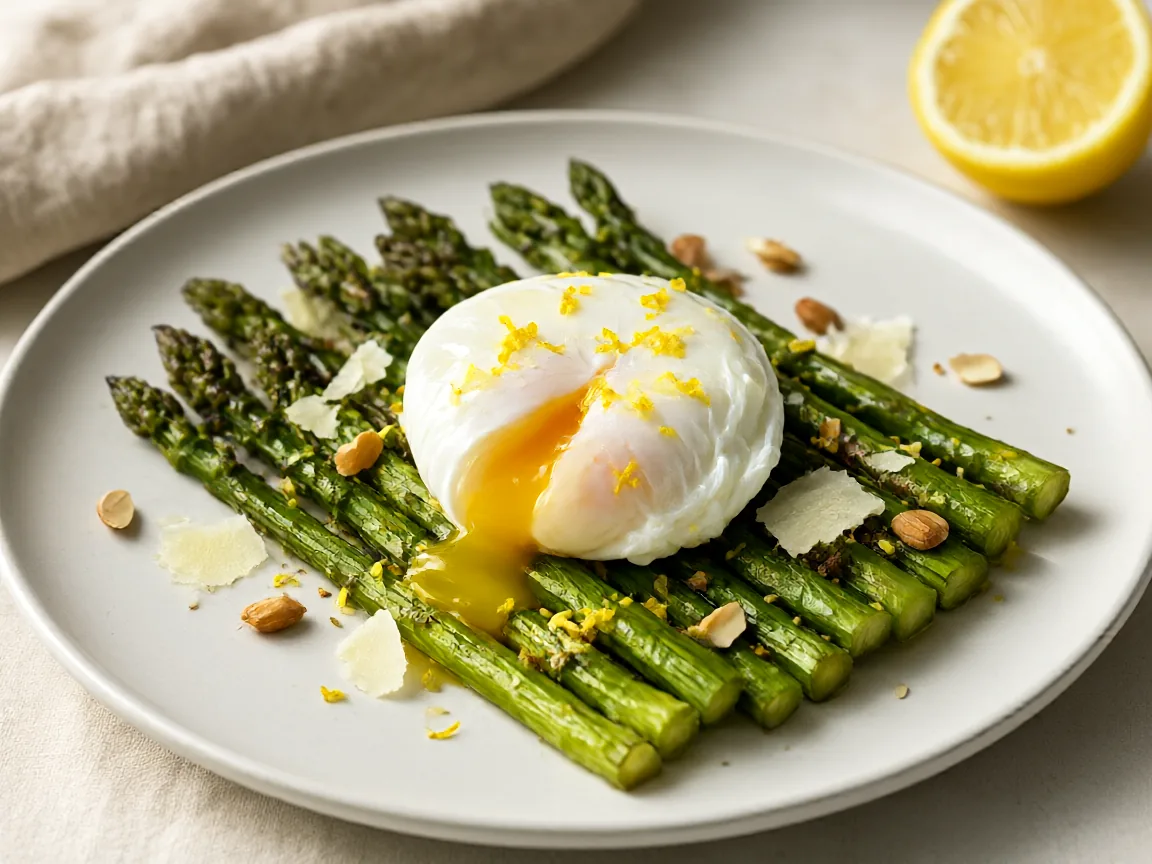
Recipe 1: Lemon parmesan roasted asparagus
For four side servings, heat the oven to 425°F, or 220°C. Toss one pound of trimmed asparagus with one tablespoon of olive oil, salt, and pepper. Spread the spears in a single layer so they roast rather than steam. Roast thin spears for about eight to ten minutes and thick spears for about twelve to fifteen minutes, checking for tenderness.
Finish with lemon zest, a squeeze of lemon juice, and one to two tablespoons of finely grated parmesan. Add the cheese after roasting so it does not burn while the vegetable cooks. If you want more protein, serve the asparagus with eggs, salmon, chicken, or a small portion of steak. A tablespoon of toasted almonds can add crunch, but measure the amount because nuts increase the energy content.
The key is to avoid soaking the asparagus in oil. Enough oil helps browning and carries flavor, but a heavy coating can make the side feel greasy. If the spears are very thick, turn them once halfway through cooking. They are ready when a knife enters the thickest part with some resistance but the stalk is not hard.
Recipe 2: Garlic butter skillet asparagus
Skillet asparagus is faster than roasting and works well on a weeknight. Heat a wide pan over medium-high heat. Add one teaspoon of olive oil and the trimmed asparagus. Cook for three minutes, turning the spears so they gain a little color. Add two tablespoons of water, cover, and steam until nearly tender. Remove the lid and let the remaining water evaporate.
Lower the heat and add one tablespoon of butter, one minced garlic clove, black pepper, and lemon zest. Toss for thirty to sixty seconds, just until the garlic smells fragrant. Do not let the garlic sit in a dry hot pan because it can turn bitter. For a complete meal, add cooked shrimp, sliced chicken, or a fried egg at the end.
This method gives you control over texture. More water and a longer covered stage produce softer spears. Less water and a wider pan keep the vegetable more crisp. If the pan is crowded, cook the asparagus in batches. Crowding creates steam and can leave the stalks pale and watery.
Recipe 3: Grilled asparagus with herb dressing
Grilling adds a smoky flavor without needing a sweet glaze. Trim the spears and toss them with a small amount of olive oil, salt, and pepper. Place thick spears perpendicular to the grates or use a grill basket so they do not fall through. Grill over medium-high heat, turning once or twice, until the stalks have light char marks and are tender.
For the dressing, combine chopped parsley or cilantro, lemon juice, olive oil, a little Dijon mustard, and minced garlic. Dijon mustard is usually used in a small amount, but check the label if you are avoiding added sugar. Spoon the dressing over the asparagus after grilling. A fresh dressing is easier to portion than brushing on a large amount of sauce before cooking.
Grilled asparagus can be served warm or at room temperature. Add it to a plate with grilled chicken, salmon, or a burger without a bun. It also works in a salad with boiled eggs, cucumber, and a measured amount of feta.
Recipe 4: Asparagus and egg breakfast skillet
Cut asparagus into one-inch pieces and sauté the stalks in olive oil for two to three minutes. Add the tips, sliced mushrooms, and scallions. Cook until the vegetables are nearly tender, then make two wells and crack in eggs. Cover the pan until the whites set while the yolks remain as soft as you prefer.
Finish with black pepper, herbs, and a small amount of cheese. If you prefer scrambled eggs, cook the vegetables first, move them to one side, and add beaten eggs to the open space. Fold everything together when the eggs are nearly set. This creates a breakfast that uses asparagus for texture and volume rather than treating it as a garnish.
For meal preparation, cook the asparagus and mushrooms in advance but add fresh eggs when serving. Reheated eggs can become rubbery, and the vegetable will stay more appealing if it is not cooked twice for too long.
Recipe 5: Creamy asparagus soup without flour
For a simple soup, sauté chopped asparagus stalks, celery, and a small amount of leek or onion in butter or olive oil. Keep the onion portion measured because it contributes more carbohydrate than the asparagus. Add unsalted chicken or vegetable broth and simmer until the stalks are soft. Reserve a few tips for the finished bowls.
Blend the soup until smooth with an immersion blender. To make it creamy, add a measured splash of heavy cream, unsweetened coconut milk, or a spoonful of cream cheese. The soup does not require flour if the vegetables are blended thoroughly. Add lemon juice, dill, or black pepper at the end to keep the flavor bright.
If you want a chunky soup, blend only half of the pot and return the purée to the remaining vegetables. Add cooked chicken, shrimp, or chopped egg for a more complete meal. Keep dairy and coconut additions moderate because they change both the energy content and the texture.
Recipe 6: Warm asparagus salad
Blanch the asparagus in simmering water for two to four minutes, depending on thickness, then move it to cold water briefly to stop the cooking. Dry the spears well. Toss them with arugula, cucumber, chopped boiled egg, and a dressing of olive oil, lemon juice, mustard, and pepper. Add a small amount of goat cheese or parmesan if you want a richer finish.
Blanching creates a vivid color and a tender but firm texture. Do not leave the spears in hot water after they are ready, or the tips can become soft. The cold-water step is helpful for a salad, but drain and dry thoroughly so the dressing does not become diluted.
For a larger meal, add tuna, chicken, salmon, or tofu. If the salad is served with a bread component, keep the bread portion separate so the asparagus and protein remain the center of the plate.
Seasoning combinations that work
- Bright: lemon, parsley, olive oil, black pepper, and parmesan.
- Rich: butter, garlic, cream, and a small amount of hard cheese.
- Spicy: chili flakes, lime, cilantro, and sesame oil.
- Mediterranean: olive oil, oregano, feta, olives, and roasted red pepper.
- Asian-inspired: ginger, garlic, tamari, rice vinegar, and scallions.
- Herbal: dill, tarragon, chives, and a light vinaigrette.
Use one main flavor direction at a time. Combining butter, coconut milk, cheese, nuts, and several sauces can make a dish heavy even if each individual ingredient is compatible with keto. A simpler finish often makes the asparagus taste fresher and makes the nutrition estimate easier.
Frozen asparagus and substitutions
Frozen asparagus can be useful for soups, frittatas, and skillet meals. It often releases more water than fresh asparagus, so thaw and drain it or cook it uncovered until the excess moisture evaporates. It may not become as crisp as fresh asparagus, but it can still provide flavor and fiber.
If asparagus is unavailable, green beans, broccoli stems, zucchini, or broccolini can fill a similar role in many recipes. Cooking time will change. Broccoli stems need longer cooking, while zucchini releases more water and should be added later. The low-carb Asian recipes collection includes additional vegetable-based meal ideas that use similar pan-cooking principles.
For a crisp coating, avoid assuming that breadcrumbs are necessary. Parmesan, finely chopped nuts, or a thin egg coating can add texture, but each should be measured. A simple roasted spear with lemon is often enough.
Nutrition and portion planning
When estimating an asparagus dish, include the vegetable, oil, butter, cheese, nuts, cream, and sauce. Asparagus itself is light, but two tablespoons of oil or a large handful of nuts can change the total energy substantially. Divide a tray or skillet into planned servings rather than eating directly from the pan.
Pair asparagus with protein and choose one main fat source. For example, roasted asparagus with salmon and lemon is different from asparagus with butter, parmesan, almonds, and a creamy sauce. Both can fit a low-carb plan, but they are not equivalent in energy. If weight management is part of your goal, use the flavor ingredients deliberately and let the vegetable provide volume.
Nutrition values vary by spear size and brand of added ingredients. Use the labels on the cheese, cream, dressing, or packaged sauce you actually use. If you are managing blood glucose or another medical condition, monitor your individual response and follow advice from your healthcare professional.
For more ingredient-led ideas, the low-carb almond meal recipes collection can provide crunchy topping options, but remember that almond meal contributes calories even when the dish remains low in net carbohydrate.
Meal preparation and storage
Trim asparagus when you bring it home and store it properly so it is ready for a quick meal. Cooked asparagus keeps best for about three days in a sealed container in the refrigerator. Reheat it briefly in a skillet or oven rather than microwaving it for a long time, which can make the tips soft and watery.
For meal preparation, roast a tray of asparagus without lemon or cheese, then add a different finish each day. One portion can receive garlic butter, another can be added to eggs, and a third can be served cold with vinaigrette. Keeping the finishing ingredients separate makes the vegetables more versatile.
If you freeze cooked asparagus, expect a softer texture after thawing. It is better suited to soup, frittata, or a blended sauce than to a crisp side. Freeze in meal-sized portions and label the date.
Common problems and fixes
- Watery asparagus: dry the spears before cooking and use a wider pan so steam can escape.
- Stringy stalks: trim more of the woody base or peel the lower portion of thick spears.
- Burned tips: lower the heat, add the tips later, or cover the dish briefly after the stalks have browned.
- Soft, dull vegetables: reduce the cooking time and move blanched asparagus to cold water immediately.
- Bitter garlic: add garlic near the end of pan cooking and keep the heat moderate.
- Heavy flavor: add lemon, vinegar, or fresh herbs instead of more butter or cheese.
Thickness is the main reason two asparagus recipes need different cooking times. Thin spears can be ready before a thick stalk has warmed through. Cook by texture rather than relying only on the clock, and remove the asparagus from heat slightly before it reaches your preferred tenderness because residual heat will continue the cooking.
How asparagus fits a keto meal
Asparagus can replace a starchy side, but it does not have to imitate potatoes or noodles. A plate with asparagus, eggs, and salmon has a different role from a creamy asparagus soup or a grilled vegetable salad. Rotating these formats helps keep a low-carb routine interesting without requiring a new shopping list every day.
The air fryer low-carb recipes collection can help you pair asparagus with roasted proteins and crisp vegetables. If you use an air fryer, keep the spears in a single layer and add wet sauces after cooking so the surface can brown.
If you want a bread side with a vegetable meal, keep the portion intentional. The almond meal bread keto guide is one option, but asparagus can also provide enough volume that a bread component is not necessary for every meal. Let appetite, the rest of the plate, and your carbohydrate target guide the choice.
FAQ
How many asparagus spears can I eat on keto?
There is no universal number because spear size and your daily target vary. A measured serving of plain asparagus is usually easy to include in a lower-carbohydrate plan. Count the full portion and include the added oil, cheese, nuts, or sauce in the meal estimate.
Is asparagus better roasted or steamed?
Both methods can work. Roasting develops browned edges and a deeper flavor, while steaming preserves a clean vegetable taste and a softer texture. Choose the method that fits the rest of the meal and avoid overcooking either way.
Can I eat asparagus every day?
Many people can include asparagus regularly, but a varied vegetable rotation provides different textures and nutrients. If a large increase in fiber causes digestive discomfort, increase portions gradually and drink enough fluid.
Why is my asparagus tough?
The base may be woody, the spears may be very thick, or the vegetable may be undercooked. Trim or peel the lower stalk, cook thick spears longer, and test the thickest part with a knife.
Does asparagus need to be peeled?
Thin and medium spears usually do not. Thick spears can benefit from peeling the lower stalk, especially if the outside feels fibrous. The tips should not be peeled.
Asparagus on keto is easiest to manage when the vegetable is treated as a flexible foundation rather than a token garnish. Roast it with lemon, sauté it with garlic, grill it with herbs, fold it into eggs, or blend it into soup. Measure calorie-dense finishes, check packaged sauces, and pair the portion with a satisfying protein. Those simple habits let asparagus add color, fiber, and variety to a lower-carbohydrate meal plan.