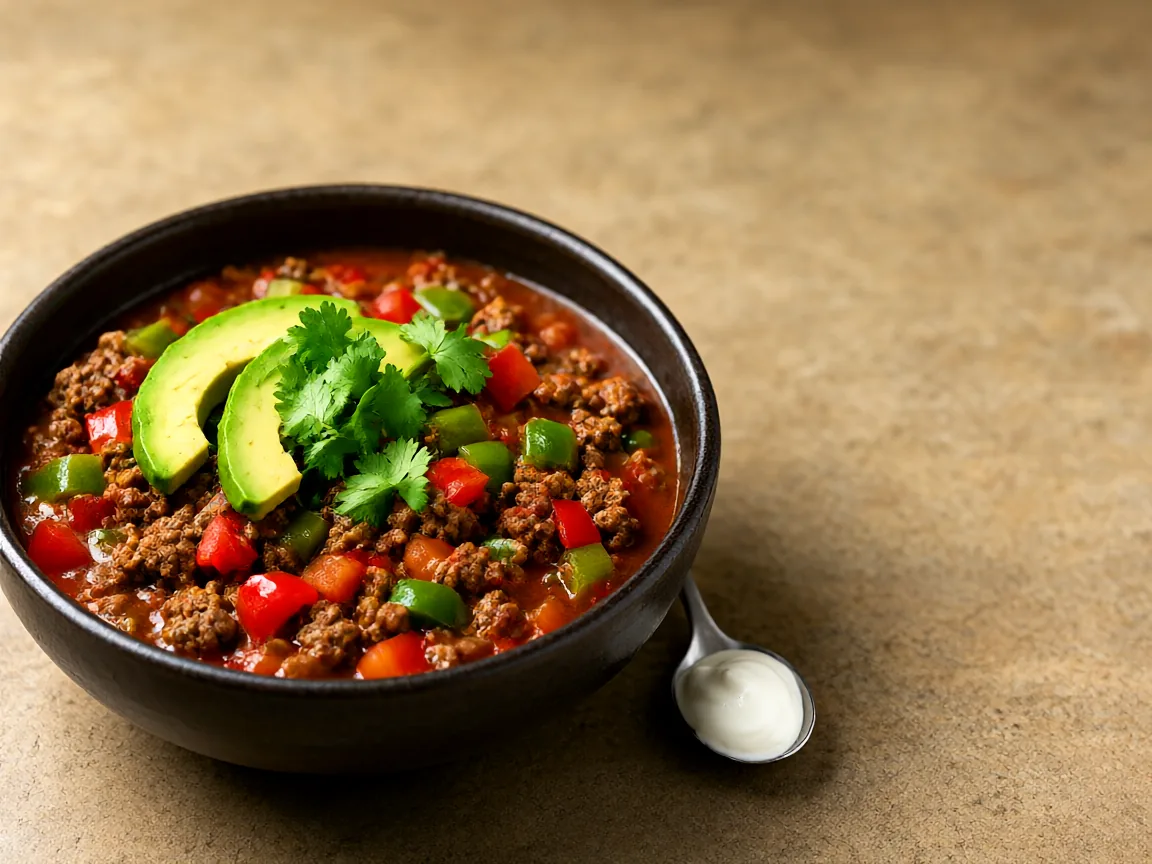
This low carb beef chili is a thick, savory bowl built around browned ground beef, peppers, tomatoes, broth, and a balanced blend of chili spices. It keeps the comfort of a slow-simmered chili while using a controlled amount of tomato and no beans or added sugar. The texture comes from reducing the cooking liquid, not from flour or starch, so the finished pot is easy to portion and flexible enough for a weeknight dinner or make-ahead lunch.
The method below includes stovetop, slow-cooker, and pressure-cooker options, plus guidance for adjusting heat, changing the meat, storing leftovers, and choosing toppings. If you are planning a broader menu, the low-carb recipe hub provides additional ideas for breakfasts, snacks, and vegetable-based sides.
Why this chili stays low carb
Many traditional chili recipes rely on beans, sweetened tomato products, corn, or a large quantity of onions. This version uses ground beef for body and a moderate amount of crushed tomatoes for acidity. Bell pepper, celery, mushrooms, and zucchini can add volume, but they are added in amounts that keep the pot hearty without turning it into a vegetable stew.
Carbohydrates vary by tomato brand and serving size. Read the label on crushed tomatoes, broth, chili sauce, and spice blends. Some chili powders contain added starch or sugar, and prepared salsa can vary considerably. If you are tracking closely, weigh the finished chili and divide it into equal containers instead of estimating by ladle.
Ingredients for six servings
- 2 pounds ground beef, preferably 85–90% lean
- 1 tablespoon avocado oil, only if the beef is very lean
- 1 medium yellow onion, finely diced, optional or reduced to taste
- 1 green bell pepper, diced
- 2 celery stalks, diced
- 4 cloves garlic, minced
- 2 tablespoons chili powder, adjusted for heat
- 2 teaspoons ground cumin
- 1 teaspoon smoked paprika
- 1 teaspoon dried oregano
- 1/2 teaspoon black pepper
- 1 1/2 teaspoons fine salt, plus more after simmering
- 1 can, about 14 ounces, diced or crushed tomatoes with no added sugar
- 1 1/2 cups beef broth
- 2 tablespoons tomato paste
- 1 tablespoon apple cider vinegar or lime juice, added at the end
For toppings, use avocado, shredded cheddar, sour cream, chopped cilantro, scallions, jalapeño, lime, or a spoonful of plain Greek yogurt. If you want more vegetables, add chopped zucchini, mushrooms, or cauliflower rice near the end. Keep toppings separate when meal prepping so the chili reheats without becoming watery.
Brown the beef properly
Heat a heavy pot or Dutch oven over medium-high heat. Add the beef in two batches if necessary. Press it into the pan and leave it undisturbed for a minute or two before breaking it apart. Browning creates savory flavor that simmering alone cannot produce. Stir and break the meat into small pieces, then cook until no pink remains and the pan is beginning to dry.
If the beef releases a large amount of fat, spoon off some but leave enough to carry the spice flavors. Very lean beef may need the tablespoon of oil listed above. Do not add the vegetables while the pan is crowded with raw beef because they will steam instead of developing flavor.
Build the chili base
- Cook the vegetables. Add onion, bell pepper, and celery to the browned beef. Cook for five to seven minutes, stirring occasionally, until the vegetables soften.
- Add the garlic and spices. Stir in garlic, chili powder, cumin, smoked paprika, oregano, pepper, and salt. Cook for about one minute until fragrant. Toasting the spices briefly helps them bloom in the beef fat.
- Stir in tomato paste. Cook the paste for another minute. It should darken slightly and coat the meat.
- Add tomatoes and broth. Pour in the tomatoes and broth, scraping the bottom of the pot to release browned bits.
- Simmer uncovered. Bring the chili to a gentle bubble, then reduce the heat. Simmer uncovered for 35–50 minutes, stirring every few minutes, until the sauce is thick enough to mound slightly on a spoon.
- Finish with acid. Stir in vinegar or lime juice at the end. Taste for salt, heat, and brightness before serving.
Keep the simmer gentle rather than boiling hard. A rapid boil can make the beef tough and cause tomato sauce to splatter. If the chili becomes too thick before the flavors develop, add broth by the tablespoon. If it is too thin, leave the lid off and continue reducing.
Slow-cooker method
Brown the beef in a skillet first, then transfer it to the slow cooker. Cook the onion, pepper, celery, garlic, spices, and tomato paste briefly in the same skillet before adding them to the pot. This extra step creates better flavor and reduces the watery taste that can occur when raw ingredients are placed directly into the cooker.
Add the tomatoes and broth, then cook on low for six to eight hours or on high for three to four hours. The exact time depends on the appliance. If the chili is thinner than you like, remove the lid for the final 30 minutes or transfer it to a pot and reduce it on the stove. Add vinegar or lime after cooking, not at the beginning, so the flavor remains bright.
Pressure-cooker method
Use the sauté setting to brown the beef, soften the vegetables, and toast the spices. Add the tomatoes and broth, scrape the bottom thoroughly, and cook under high pressure for 15 minutes. Allow a natural release for at least 10 minutes, then vent the remaining pressure. Stir and reduce on sauté if needed.
Scraping the pot is essential because browned bits can trigger a burn warning. Do not exceed the appliance’s maximum fill line. Tomato-based dishes can foam, especially when the pot is full, so follow the manufacturer’s safety instructions.
Adjust the flavor and heat
Chili powder blends vary, so add less at first if you are unsure. Cumin provides earthy depth, smoked paprika adds a gentle smokiness, and oregano gives the pot a herbal finish. For more heat, add diced jalapeño, cayenne, chipotle powder, or a low-sugar hot sauce. Add hot ingredients in stages so you can stop at the level your household prefers.
If the chili tastes flat, add salt first, then a small amount of lime juice or vinegar. If it tastes too sharp, simmer longer or add a spoonful of sour cream when serving. If the flavor is bitter, the spices or garlic may have scorched; dilute with more tomato and broth, then taste again. A little unsweetened cocoa powder can add depth, but use only a small amount.
Low-carb additions
Chopped mushrooms add savory flavor and make the pot feel more substantial. Zucchini can be added during the last 15 minutes so it keeps some shape. Cauliflower rice can be stirred in near the end, but it releases moisture and may thin the chili. Shredded cabbage can be cooked separately and used as a base.
For a creamy variation, stir in a small amount of cream cheese after the pot is off the heat. For a smoky version, add chipotle and a little lime. For a green chili direction, use diced green chiles, mild peppers, and cilantro, then finish with sour cream. Make one change at a time so you can tell how it affects thickness and flavor.
Topping combinations
A classic bowl needs only shredded cheddar, sour cream, and scallions. Avocado adds cool richness, while cilantro and lime brighten the beef. Pickled jalapeños provide acidity and heat. Crumbled pork rinds can replace crackers when you want crunch, but measure them if you are tracking portions.
For a chili bowl, serve the beef over cauliflower rice or sautéed cabbage. For lettuce cups, let the chili cool slightly so the leaves do not wilt immediately. For a stuffed pepper, use a thicker chili and top with cheese before baking. The same pot can become several different meals without changing the base recipe.
Serving with low-carb bread
Toast a sturdy low-carb bread before serving so it can hold chili without becoming soggy. The keto almond-meal bread guide provides a useful comparison of sliceable almond-based bread and its moisture balance. A small piece of toasted bread can be enough to add contrast without turning the bowl into a sandwich meal.
Air-fryer side ideas
The chili cooks best in a pot, but an air fryer can prepare useful sides. Roast cauliflower florets, zucchini, peppers, or small portions of cabbage while the chili simmers. You can also crisp a small amount of seasoned pork-rind topping separately. For more appliance ideas, see these air fryer low-carb recipes.
Keep air-fried vegetables dry before cooking and leave space between pieces. Adding them directly to the pot too early can make the chili watery. Add roasted vegetables at serving or during the final few minutes if you want them to absorb flavor while keeping their texture.
Substitutions
Ground turkey or chicken can replace some or all of the beef, but the flavor will be lighter and the meat may need extra oil. Ground pork gives a richer result. For a bean-free vegetarian variation, use mushrooms, zucchini, cauliflower, and a small amount of textured plant protein if it fits your ingredient plan, but the cooking liquid will need adjustment.
If you avoid nightshades, replace tomatoes with broth, mushrooms, zucchini, and a measured amount of vinegar, then season with herbs and smoked salt. It will be a different stew rather than a classic red chili. For additional almond-based side ideas, these low-carb almond meal recipes can help you plan a crunchy accompaniment.
Texture troubleshooting
Chili is too thin: Simmer uncovered, stir occasionally, and allow the tomato paste to reduce into the sauce. If needed, remove a cup of liquid and reduce it separately before returning it to the pot. Avoid adding a large amount of xanthan gum because it can create a slippery texture.
Chili is too thick: Add warm broth a few tablespoons at a time. Stir well and wait a minute before adding more. The pot will thicken further as it cools, so stop slightly looser than your final target.
Beef tastes bland: Check salt first, then add acid and toasted spices. Beef broth and tomato brands vary in salt, so the recipe cannot provide an exact final amount for every kitchen.
Vegetables disappear: Add them in stages. Onion and celery can cook with the beef, while zucchini and mushrooms may need only the final 15–20 minutes. Larger pieces retain more texture than finely diced pieces.
Storage and meal prep
Cool the chili promptly in shallow containers and refrigerate it for three to four days. Store toppings separately. The flavor often improves overnight because the spices blend into the broth. Reheat gently on the stove or in the microwave, adding a splash of broth if the sauce has tightened.
Freeze chili in single-serving containers for up to two months for the best texture. Leave space at the top because the liquid expands. Thaw in the refrigerator and reheat until hot, then add fresh lime, cilantro, avocado, or sour cream. Do not repeatedly thaw and refreeze the same container.
Nutrition and portion planning
Nutrition depends on the fat percentage of the beef, tomato product, broth, toppings, and final yield. A bowl with cheese and avocado will be more energy-dense than a bowl topped with herbs and cabbage. Enter the exact ingredients into a calculator, weigh the finished pot, and divide it by the serving weight you plan to use.
Low-carb chili is filling, but portion size still matters. If you follow a medically prescribed diet or need to monitor sodium, review the broth, seasoning, and condiment labels with a qualified professional. This recipe is general food guidance, not individualized medical advice.
Frequently asked questions
Can I make low carb beef chili without beans?
Yes. Browned beef, vegetables, tomatoes, broth, and spices provide plenty of body. Mushrooms, cauliflower, and zucchini can add volume without using beans. A longer uncovered simmer helps the sauce become thick and spoonable.
Can I use canned tomatoes?
Yes. Choose diced or crushed tomatoes with no added sugar and check the label. Crushed tomatoes create a smoother chili, while diced tomatoes provide more texture. Drain a small amount of liquid only if the final pot tends to be thin.
How can I reduce the onion?
Use less onion and add celery, pepper, mushrooms, garlic, or scallions for aromatic flavor. Cook the vegetables well so their flavor develops. A small amount of onion can still provide depth without dominating the portion.
Can I make this in an air fryer?
The chili itself needs a pot or pressure cooker for its simmering liquid. An air fryer is useful for roasting the vegetables or making a crisp topping. Cook the beef separately if using the appliance, then combine it with the sauce on the stove.
What should I serve with chili?
Try avocado, sour cream, cheddar, cabbage slaw, cauliflower rice, roasted broccoli, lettuce cups, or a toasted slice of low-carb bread. Keep watery toppings separate until serving.
Final tips for a reliable low carb beef chili
Brown the beef in batches, toast the spices briefly, use tomatoes and broth without added sugar, and simmer uncovered until the sauce reduces. Taste for salt and acid at the end rather than relying on the first measurement. Store toppings separately, and portion the finished pot by weight when you need consistent nutrition information.
Once the base method works, change one variable at a time: smoked paprika, mushrooms, green chiles, chipotle, or a creamy finish. That makes it easy to develop several low carb beef recipes from one dependable technique while keeping the ingredients relevant, the texture satisfying, and the meal simple to repeat.