Avocado bread keto is a soft, savory loaf made with ripe avocado, eggs, and a lower-carbohydrate flour such as almond flour. It is not the same as wheat bread, because it does not depend on a gluten network or a large amount of starch for structure. The result is usually a tender, sliceable loaf with a mild green color and a slightly rich flavor. It can work as a breakfast side, a sandwich base, or a way to use a ripe avocado before it becomes over-soft.
The key to a reliable avocado bread is controlling moisture. Avocados vary in size and water content, and the amount of oil or flour can change the crumb quickly. This guide gives a practical base formula, explains how to select and prepare the avocado, covers baking and cooling, offers substitutions, and describes how to store and serve the loaf. The goal is a useful low-carb bread component, not a promise that it will behave exactly like a wheat bakery loaf.
What makes avocado bread keto-style?
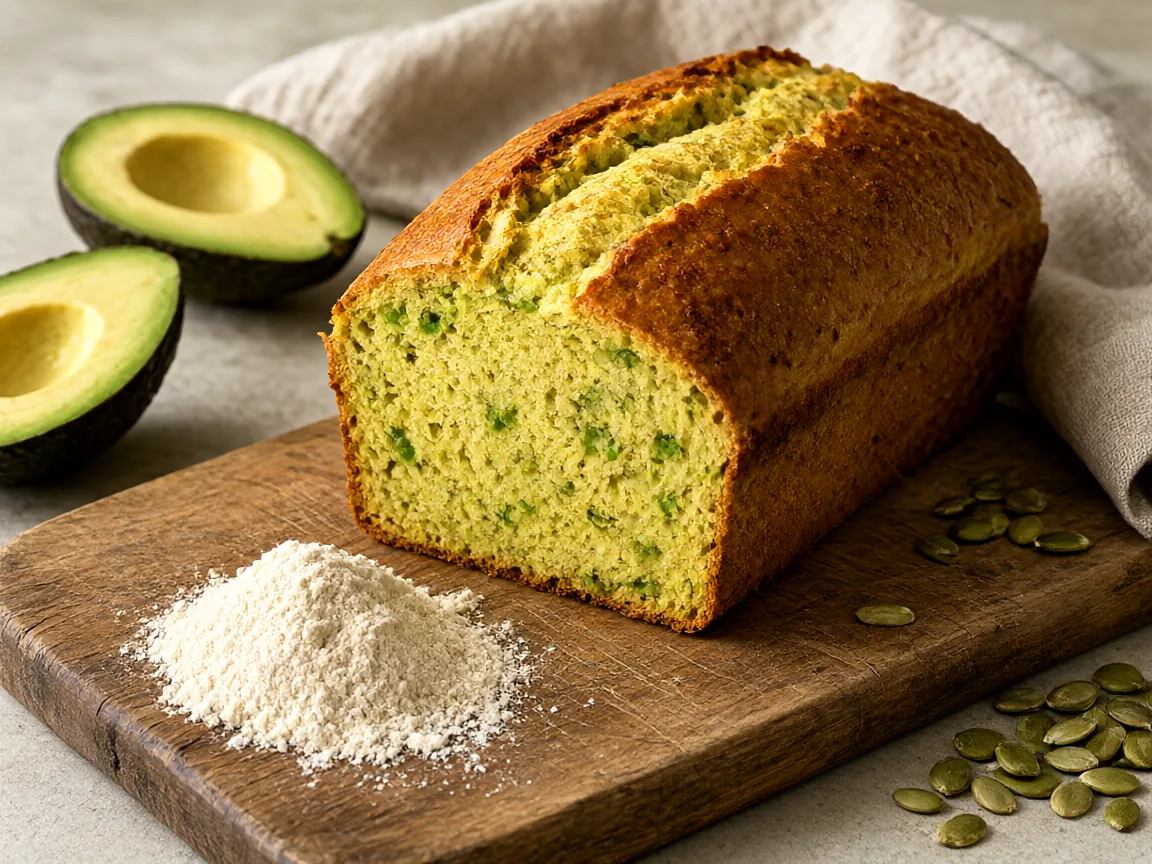
A lower-carbohydrate avocado loaf replaces wheat flour with ingredients such as almond flour, ground flaxseed, or a small amount of coconut flour. Eggs provide structure, while avocado contributes moisture and fat. A binder such as psyllium husk or ground flax can help the loaf hold together after cooling. Baking powder provides lift, but the loaf will usually be denser than a traditional yeast bread.
Avocado is not a substitute for all of the flour. It adds water and fat, so increasing it without changing the dry ingredients can create a wet center. The safest way to adjust the recipe is to change one variable at a time. Use a consistent avocado weight, measure the flour, and let the baked loaf cool completely before deciding whether the next version needs more or less liquid.
The flavor is mild enough for savory toppings. Lemon, garlic, herbs, chili, sesame seeds, parmesan, and scallions all work well. If you want a neutral loaf, keep the seasonings simple. If you want a more noticeable avocado flavor, use a ripe fruit and add a small amount of lime or cilantro after the loaf has cooled rather than adding a large amount of wet ingredients to the batter.
Ingredients for one small loaf
- 1 cup finely ground blanched almond flour
- 1/4 cup ground flaxseed
- 1 tablespoon ground psyllium husk powder
- 1 teaspoon baking powder
- 1/2 teaspoon fine salt
- 1 medium ripe avocado, mashed, about 140 to 160 grams of flesh
- 3 large eggs
- 2 tablespoons olive oil or melted butter
- 1 teaspoon lemon juice or apple cider vinegar
- Optional: garlic powder, dried herbs, sesame seeds, pumpkin seeds, or grated parmesan
Use finely ground almond flour for a smoother crumb. Coarse almond meal can work, but the loaf will have a more rustic texture and may need a little extra resting time. The avocado should be ripe and creamy without a sour smell or dark, stringy damage. If the flesh has a few superficial brown spots, remove them before measuring the usable portion.
Do not add water automatically. Mash the avocado and whisk it with the eggs, oil, and acid first. The moisture in the fruit and the size of the eggs determine how loose the batter becomes. If the batter looks very thick after resting, add water one teaspoon at a time. If it looks loose, allow the psyllium and flax to absorb moisture before adding extra flour.
How to make avocado bread keto-style
1. Prepare the pan and oven
Heat the oven to 350°F, or 175°C. Line a small loaf pan with parchment, leaving enough paper over the long sides to lift the loaf out later. A pan that is too large will produce a flat loaf that dries at the edges before the center sets. A small pan gives the batter enough height for slices.
If your oven runs cool, allow it to preheat fully before mixing the batter. The baking powder begins working as soon as the wet and dry ingredients meet, so a ready oven helps the loaf rise evenly. Keep the rack in the middle position for more consistent heat.
2. Mix the dry ingredients
Whisk the almond flour, flaxseed, psyllium, baking powder, salt, and any dry herbs in a bowl. Break up clumps before adding wet ingredients. Uneven psyllium can create a gummy patch in one part of the loaf and a dry patch in another. If using grated parmesan or seeds inside the loaf, mix them into the dry ingredients so they are distributed evenly.
3. Prepare the avocado mixture
Mash the avocado until mostly smooth. A few small pieces are acceptable, but large pieces can create wet pockets. Whisk in the eggs, oil, and lemon juice. If the avocado is very firm, use a blender or food processor for a smoother mixture, but avoid blending for so long that the eggs become foamy.
4. Combine and rest
Fold the wet mixture into the dry ingredients until no dry flour remains. The batter will be thick and may seem slightly loose at first. Let it rest for five to eight minutes while the flax and psyllium absorb moisture. After resting, it should be scoopable and hold a soft mound. If it is still runny, add one tablespoon of almond flour and wait another two minutes before adjusting again.
5. Fill and shape the pan
Spoon the batter into the lined pan and smooth the top with a damp spatula. Sprinkle seeds or parmesan over the surface if desired. Do not pack the batter down aggressively because that can make the center dense. Tap the pan once or twice on the counter to remove large air pockets, then place it in the oven.
6. Bake and check the center
Bake for about 40 to 50 minutes, depending on the pan and the moisture in the avocado. The top should be firm and lightly browned. A skewer inserted in the center should come out with a few moist crumbs rather than wet batter. If the top browns quickly, cover it loosely with foil and continue baking.
7. Cool completely
Let the loaf cool in the pan for ten minutes, then lift it out using the parchment and transfer it to a rack. Cool for at least one hour before slicing. A very moist loaf may need longer. The crumb continues to set as it cools, and slicing early can make the center appear gummy and cause the slices to break.
How to improve the crumb
A soft avocado bread should be moist but not sticky. If the center is gummy, the avocado may have been large, the batter may have been too wet, or the loaf may have been cut while warm. Reduce the avocado slightly next time, add a tablespoon of almond flour, or extend the baking time while protecting the top with foil.
If the loaf is dry and crumbly, it may have been baked too long or the batter may have been too thick. Check the avocado weight and do not add extra flour before the resting stage. A serrated knife and medium-thick slices can also make a crumbly loaf easier to handle.
If the loaf sinks, the center may not have been fully baked, the pan may have been overfilled, or the batter may have contained too much moisture. Do not open the oven repeatedly during the first half of baking. Use a smaller loaf pan only if the batter has enough room to rise without overflowing.
Flavor variations
- Lemon herb: add dried dill, parsley, chives, and lemon zest.
- Garlic parmesan: use garlic powder, black pepper, and grated parmesan.
- Spicy: add chili flakes, smoked paprika, and a small amount of jalapeño powder.
- Seeded: top with sesame, sunflower, or pumpkin seeds.
- Breakfast: keep the seasoning mild and add a little cheddar or scallion.
- Asian-inspired: use scallion, sesame seeds, ginger powder, and a small amount of furikake without added sugar.
Keep wet additions limited. Fresh herbs can be finely chopped and patted dry, but large amounts of tomato, salsa, or watery vegetables can change the batter. If you want a strong topping, add it to the finished slice rather than mixing it into the loaf.
Flour and binder substitutions
Almond flour is the most forgiving base for this style of loaf. Almond meal can replace part of it, but the crumb will be coarser. Coconut flour is much more absorbent and cannot be substituted cup for cup. A coconut flour version needs fewer dry ingredients, more egg structure, and a different liquid balance, so use a formula designed for coconut flour rather than converting this one directly.
Ground flaxseed can replace some of the psyllium, although it may create a darker and more fragile loaf. If you use no psyllium, let the batter rest longer and expect the bread to be more delicate. Xanthan gum can be used in a small amount in some formulas, but too much can create a rubbery center.
For a different almond-based bread format, compare this method with the almond flour low-carb bread recipe. The avocado loaf is moister and more tender, while a plain almond flour bread may be easier to toast and use for sandwiches.
Serving ideas
Toast a medium slice and top it with eggs, smoked salmon, cottage cheese, or sliced turkey. Because the loaf already contains avocado, a small amount of topping may be enough. Add lemon, chili flakes, or fresh herbs for contrast. If the bread is very moist, toast it gently rather than using very high heat, which can brown the outside before the center warms.
For a sandwich, use a thicker slice and keep wet fillings moderate. Lettuce, cucumber, grilled chicken, tuna, or roast vegetables work well. A large amount of mayonnaise or creamy dressing can make the bread soggy, so spread a thin layer and serve the sandwich soon after assembling.
For breakfast, serve one slice with eggs and sautéed greens. For lunch, use toasted slices with chicken salad or tuna. The low-carb avocado recipes collection offers additional ways to use the fruit, but count the avocado in both the bread and the topping if you combine them in one meal.
Nutrition and portion planning
The carbohydrate estimate for avocado bread depends on the avocado size, almond flour, flaxseed, eggs, and any cheese or seeds. Count the total recipe, subtract fiber according to the method you normally use, and divide by the number of equal slices. A loaf cut into eight thick slices has a different serving value from a loaf cut into twelve thin slices.
Avocado and almond flour both contribute fat and energy. If the bread is served with butter, cheese, eggs, and mayonnaise, the total meal can become much richer than the bread alone suggests. If weight management is part of your goal, decide whether the bread is replacing another fat source or being added on top of it.
Ingredient brands vary, particularly for almond flour and flaxseed. Use the nutrition panels for the products you actually buy. If you are managing blood glucose or another medical condition, monitor your individual response and follow guidance from your healthcare professional.
For a meal with a lighter texture, compare the bread with the almond flour tortillas keto guide. Tortillas are more flexible and often thinner, while avocado bread is better for toast and open-faced servings.
Storage, freezing, and reheating
Cool the loaf completely before storing it. Keep it in an airtight container or sealed bag in the refrigerator for up to three days. The cold firms the crumb, so toast slices briefly before serving. Do not seal a warm loaf because trapped steam can make the surface wet and encourage spoilage.
Slice the loaf before freezing and place parchment between the slices. Store them in a freezer-safe bag with excess air pressed out. Toast directly from frozen or thaw in the refrigerator. Freezing the whole loaf makes portioning difficult and can create uneven thawing.
If the bread becomes too soft after refrigeration, use a toaster oven or dry skillet to restore the surface. Avoid adding oil during reheating unless the slice is very dry. The avocado and almond flour already provide richness.
Common problems and fixes
- Gummy center: cool longer, bake a little longer, reduce avocado moisture, or add a small amount of almond flour.
- Crumbly slices: let the loaf cool fully, use a serrated knife, and check the binder measurement.
- Dense loaf: avoid overmixing, do not pack the batter down, and check that the baking powder is fresh.
- Flat loaf: use a smaller pan, check the oven temperature, and avoid adding extra liquid.
- Dark top: cover loosely with foil after the surface has browned and continue baking the center.
- Strong avocado taste: add lemon, herbs, garlic, or toasted seeds to create contrast.
Make one adjustment at a time. If you change the flour, avocado amount, eggs, and baking time together, it becomes difficult to understand what improved the loaf. Record the avocado weight and the final slice count so the next batch is easier to repeat.
How it fits a low-carb bread collection
Avocado bread keto can be one option in a rotation of lower-carbohydrate bread alternatives. The low-carb recipes hub can help you pair it with vegetables, eggs, meat, and seafood without relying on bread for every meal. A small slice may be enough when the plate already contains protein and a creamy topping.
If you want a crisper or more neutral loaf, try a formula based on almond flour without avocado. If you want a softer bread, keep the avocado version moist but make sure to cool and toast it properly. Different bread alternatives have different strengths, so choose the texture that matches the meal rather than expecting one loaf to replace every type of bread.
FAQ
Does avocado bread taste strongly like avocado?
Usually the flavor is mild, especially when lemon, herbs, garlic, or seeds are added. A very ripe avocado can be more noticeable. Use a balanced amount of seasoning rather than adding extra avocado to intensify the taste.
Can I make avocado bread without almond flour?
You can use another flour, but the formula must change. Coconut flour absorbs much more liquid, and sunflower seed flour can behave differently from almond flour. Test a small batch and adjust the binder and moisture gradually.
Why did my loaf turn green?
Avocado naturally gives the crumb a green or yellow-green tone, especially when the fruit is used generously. The color can also vary with the variety of avocado and the amount of baking. A green tint is not automatically a sign of spoilage.
Can I add fresh avocado pieces to the batter?
Small pieces may work, but they can create wet pockets. Mash the avocado smoothly for a more consistent loaf. Add sliced avocado as a topping after baking instead.
Is avocado bread good for sandwiches?
It can work for open-faced sandwiches and moderate fillings after cooling and toasting. Use medium-thick slices, keep wet sauces limited, and assemble close to serving time so the crumb stays firm.
Avocado bread keto is best treated as a moist, tender alternative rather than a traditional wheat loaf. Measure the avocado, balance it with almond flour and a binder, rest the batter, bake until the center is set, and cool completely before slicing. With a measured portion and simple toppings, the loaf can bring variety to breakfasts, sandwiches, and low-carb meals without depending on a large amount of starch.