Low carb beef dishes can cover far more than a plain burger. The right cut and cooking method can turn beef into a quick skillet meal, a slow braise, a crisp lettuce wrap, a rich meatball, or a simple roast with vegetables. The most useful approach is to keep the beef flavorful, choose sauces without hidden sugar, and build the plate around non-starchy vegetables rather than flour, bread, or a large serving of rice.
This guide organizes practical ideas by cooking style and cut. It includes ingredient choices, substitutions, texture tips, storage, nutrition notes, and a short FAQ. For more meal-planning ideas, visit the low-carb recipe hub and combine these beef dishes with vegetables, eggs, seafood, or low-carb baking.
How to build a balanced low-carb beef dish
Start with a portion of beef that matches the meal, then add two kinds of vegetables if possible: one for volume and one for contrast. Broccoli, cauliflower, zucchini, cabbage, mushrooms, asparagus, green beans, and leafy greens all work well. Finish with a measured sauce, herbs, citrus, or a small amount of cheese.
Beef contains little or no carbohydrate on its own, but marinades, gravy, ketchup, barbecue sauce, bread crumbs, and prepared seasoning packets may contain sugar or starch. Check labels and calculate the finished dish from the actual ingredients. A low-carb meal can still be rich in calories when it contains a fatty cut, oil, butter, cheese, and a creamy sauce, so portion size remains useful.
Quick skillet beef dishes
Steak and vegetables
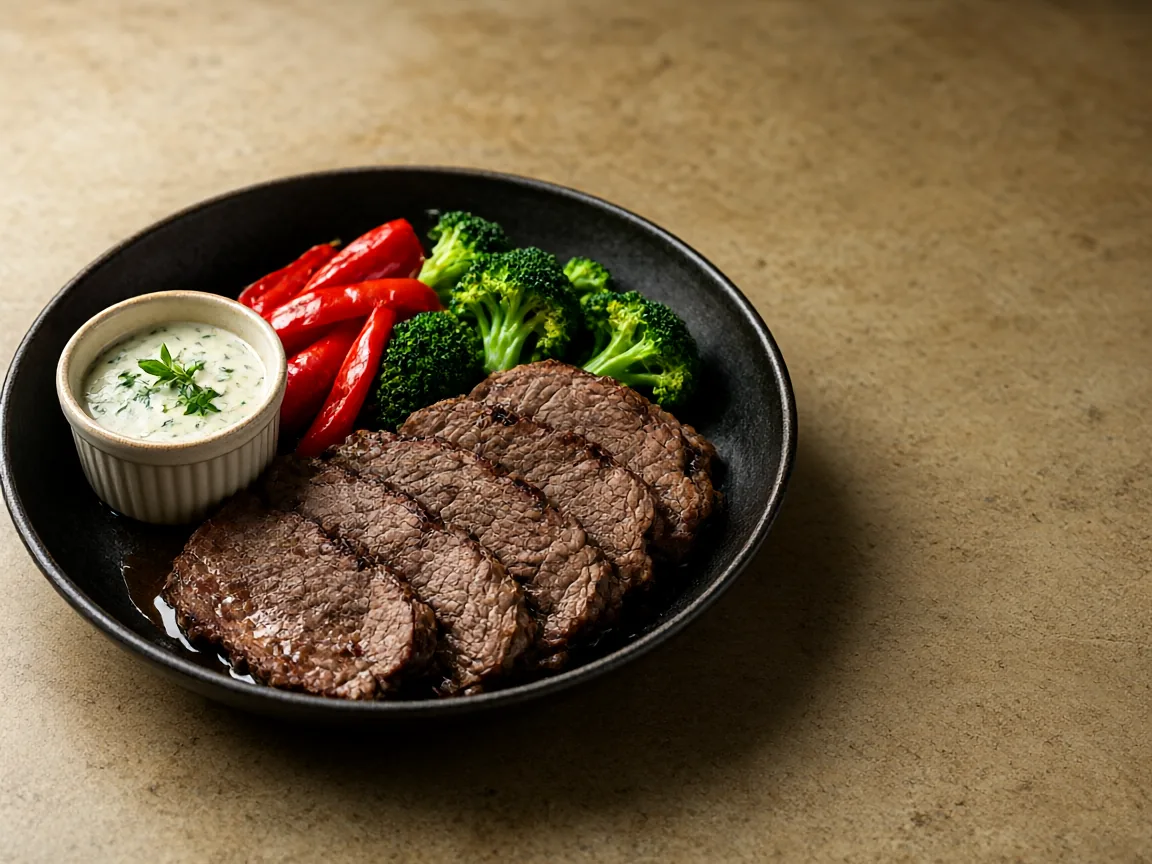
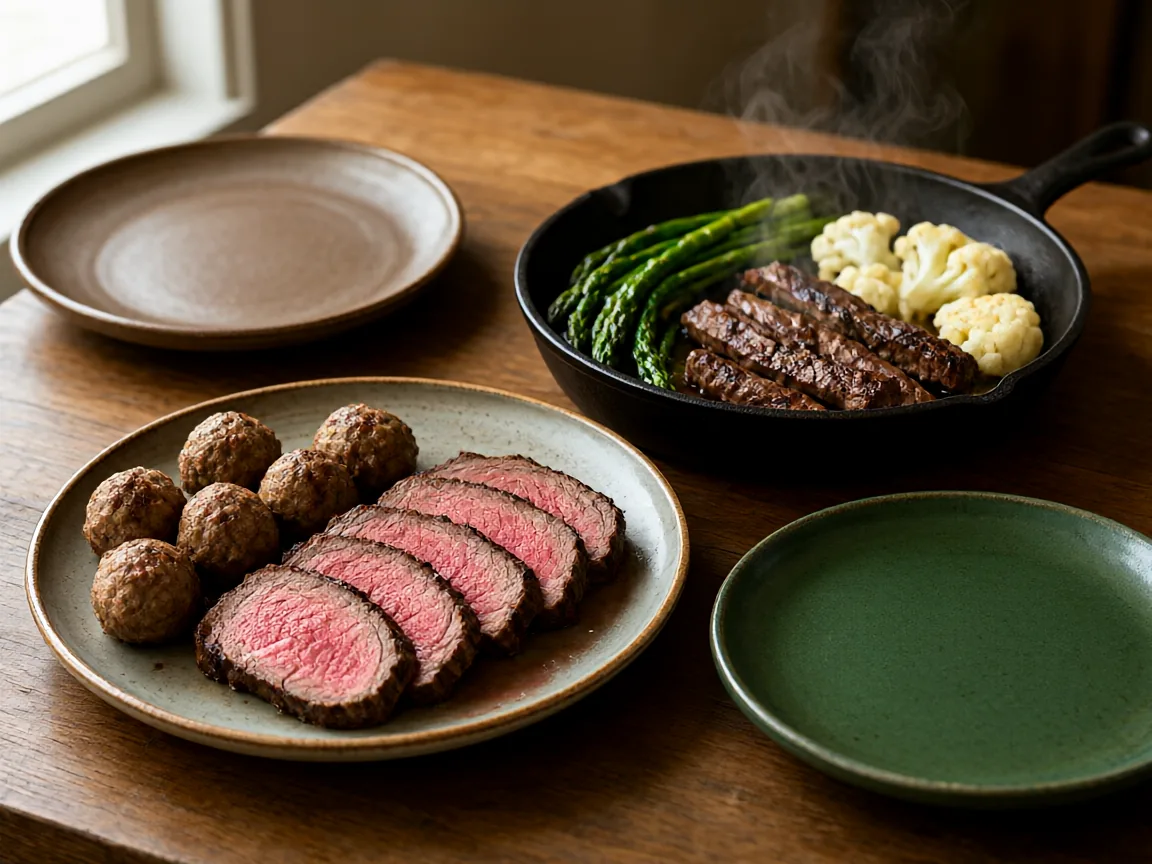
Slice sirloin, flank steak, or skirt steak across the grain. Season with salt, black pepper, garlic, and smoked paprika. Sear the beef in a hot skillet in small batches, then remove it while you cook broccoli, mushrooms, peppers, or zucchini. Return the beef with a sauce of broth, tamari, lime, and a little toasted sesame oil.
Thin steak needs high heat and a short cooking time. If the pan is crowded, the beef releases water and steams instead of browning. Rest the steak briefly before slicing, and add acidic ingredients after the meat has developed color so the surface does not become soft.
Ground beef cabbage skillet
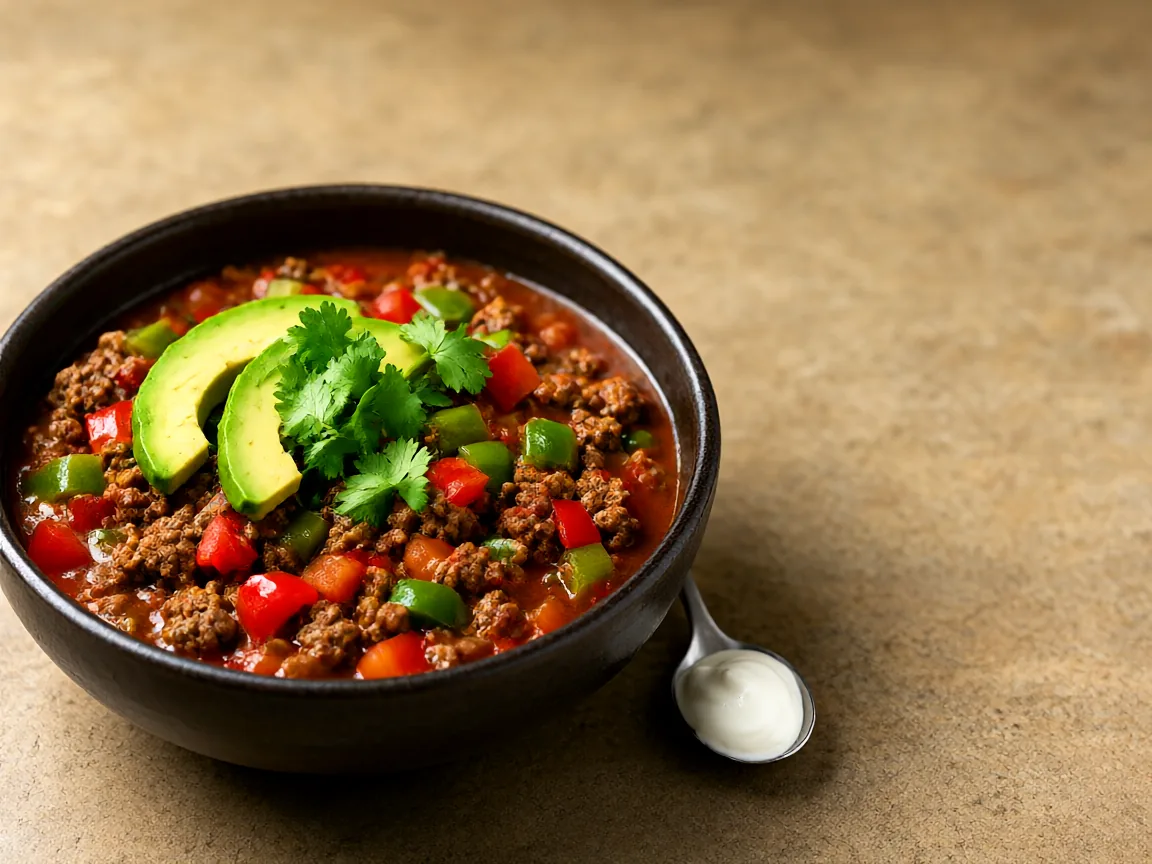
Brown ground beef with garlic, ginger, and scallions, then add thinly sliced cabbage and mushrooms. Cook until the cabbage is tender but still has some bite. Season with tamari, rice vinegar, pepper, and chili flakes. This one-pan dish stores well and can be served over cauliflower rice or eaten on its own.
Beef and egg breakfast pan
Use leftover cooked beef or brown a small amount of ground beef with spinach and peppers. Make wells in the mixture, crack in eggs, cover the pan, and cook until the whites set. Add avocado or cheese just before serving. This is an efficient way to turn dinner leftovers into a new meal without adding bread or potatoes.
Grill and broiler ideas
For grilled steak, pat the surface dry and season shortly before cooking. Let a thick steak rest after grilling, then slice it across the grain. Serve with grilled asparagus, zucchini, mushrooms, or a leafy salad. A sauce of herbs, olive oil, lemon, and vinegar adds freshness without sugar.
Ground beef patties can be seasoned with garlic, onion powder, smoked paprika, and mustard. Use lettuce, cabbage, or a toasted low-carb bun instead of a traditional roll. Add pickles, tomato, avocado, and a measured sauce. Do not press the patties repeatedly while they cook, because that pushes out moisture.
Thin beef skewers cook quickly on a broiler or grill. Thread strips of beef with mushrooms and peppers, brush with oil and herbs, and turn once. If using a marinade, choose a base of soy or tamari, garlic, ginger, lime, and chili rather than a sweet bottled sauce.
Slow-cooked beef dishes
Chuck roast with mushrooms
Brown a chuck roast, then cook it covered with beef broth, garlic, thyme, mushrooms, and a small amount of tomato paste. The roast needs time for connective tissue to soften, so use a low oven, slow cooker, or pressure cooker. Remove the meat before reducing the liquid, then finish the sauce with butter or cream cheese.
Beef short ribs
Season short ribs generously and brown them on all sides. Add broth, herbs, celery, and mushrooms, then cook until the meat is tender. Chill the sauce if you want to remove excess fat easily, or skim it while hot. Serve with mashed cauliflower or roasted cabbage.
Low-carb beef stew
Use stew beef, mushrooms, celery, turnip, and a small amount of carrot if it fits your plan. Replace flour with a long reduction or a controlled amount of thickener added at the end. Keep the pieces large enough that they do not disappear during cooking. A gentle simmer produces a better texture than a hard boil.
Ground beef favorites
Meatballs
Mix ground beef with egg, parmesan, garlic, parsley, salt, pepper, and a small amount of ground flax or pork-rind crumbs. Handle the mixture lightly and shape even balls. Brown in a skillet or bake on a rack until cooked through. Serve with zucchini noodles, a tomato sauce without added sugar, or a creamy herb dip.
Stuffed peppers
Cook ground beef with cauliflower rice, onion, garlic, oregano, and diced tomato. Fill halved peppers and bake until tender, then top with cheese. Green peppers are less sweet than red or yellow, but the choice depends on your serving plan. Keep the filling fairly dry so the peppers do not become watery.
Lettuce cups
Cook beef with ginger, garlic, mushrooms, scallions, and tamari. Spoon the warm filling into crisp lettuce leaves and top with cucumber, radish, cilantro, or sesame seeds. Keep the sauce separate until serving so the lettuce stays crisp.
Beef salads and cold dishes
Leftover steak can become a salad with mixed greens, cucumber, avocado, roasted peppers, and a dressing of olive oil, lime, mustard, and herbs. Slice the beef thinly after it has cooled. A warm steak over cool greens provides a satisfying contrast, but do not pour hot liquid dressing over delicate leaves.
For a taco-style salad, use seasoned ground beef, shredded lettuce, avocado, cheese, sour cream, and salsa with no added sugar. For a Mediterranean plate, combine beef strips with cucumber, olives, feta, and a yogurt-herb dressing. The dressing often determines the carbohydrate total, so measure it and check the label.
Low-carb beef with bread alternatives
Toast a sturdy low-carb bread before adding roast beef, lettuce, mustard, and pickles. The keto almond-meal bread guide provides ideas for a sliceable base. Keep wet sauces measured and add them immediately before eating so the bread holds its texture.
For a bread-free sandwich, use large lettuce leaves or roasted cabbage as the wrap. You can also place sliced beef on a cucumber round or a crisp cheese wafer. These options add texture without turning the meal into a large baked portion.
Air-fryer beef dishes
An air fryer is useful for meatballs, steak bites, burger patties, stuffed mushrooms, and thin strips of beef. Preheat if needed, leave space between pieces, and turn once. Smaller cuts cook quickly, so use a thermometer or visual check rather than assuming they need the same time as a full-size oven recipe.
Try garlic-butter steak bites with roasted broccoli, or air-fried meatballs with a yogurt-herb dip. For more appliance-based options, see these air fryer low-carb recipes. A short, hot cook gives better browning than a crowded basket at a low temperature.
Flavor profiles to keep beef interesting
Southwest: Use chili powder, cumin, oregano, lime, avocado, and cilantro. Add jalapeño or chipotle for heat and smoke.
Asian-inspired: Combine tamari, ginger, garlic, rice vinegar, sesame oil, scallions, and chili. Check labels on all sauces for sugar.
Mediterranean: Use oregano, lemon, garlic, olive oil, parsley, cucumber, olives, and feta. A yogurt sauce can replace a heavier gravy.
Herb and butter: Finish steak or roast beef with butter, parsley, thyme, rosemary, and black pepper. Keep the butter portion measured so the dish remains balanced.
Smoky barbecue: Use smoked paprika, mustard, vinegar, garlic, and a low-sugar sauce. A small amount of allulose can round out acidity if desired.
Substitutions
Ground turkey, chicken, or pork can replace beef in meatballs, lettuce cups, and skillet recipes. Leaner meats need more oil or a moisture-rich sauce. For a dairy-free dish, use olive oil, avocado, or a dairy-free cream alternative instead of butter, cheese, and yogurt.
For a nut-free accompaniment, use pork-rind crumbs, flax, sunflower seeds, or roasted vegetables. Almond meal can act as a binder in some meatballs, but use it in a small amount so the texture does not become gritty. These low-carb almond meal recipes illustrate how the ingredient handles moisture in other preparations, but a meat mixture still needs its own balance.
Texture and tenderness tips
Slice steak across the grain, cook thin cuts quickly, and allow thick pieces to rest. For ground beef, avoid overmixing and do not press burgers or meatballs while they cook. For slow-cooking cuts, use low heat and enough time for connective tissue to soften.
Salt timing matters. Salt steaks shortly before cooking or well in advance, but avoid leaving a thin cut heavily salted for a long time. Season ground beef gently before shaping, and taste sauces after adding broth, tamari, or cheese because these ingredients can contain substantial sodium.
Storage and meal prep
Cool cooked beef promptly in shallow containers. Store sauces, lettuce, avocado, and crisp toppings separately. Ground beef, meatballs, and cooked dishes are generally best within three to four days, while sliced steak is often better within two to three days. Reheat gently with a spoonful of broth or sauce.
Freeze meatballs, taco beef, braised beef, and burger patties in portioned containers. Label the date and the sauce. Thaw in the refrigerator and reheat until hot. Avoid repeated thawing and refreezing because the texture becomes firm and the vegetables lose their structure.
Nutrition and portion planning
Nutrition depends on the cut, fat percentage, oil, cheese, sauce, and cooked yield. A lean steak with vegetables has a different profile from a creamy short-rib dish. Enter the exact products into a calculator, include toppings, and divide by the number of servings actually prepared.
Low-carb ingredients can still be energy-dense, so pair a rich beef dish with vegetables and choose a portion that fits your daily plan. If you follow a medically prescribed diet or need to restrict a specific ingredient, review labels and preparation methods with a qualified professional.
Frequently asked questions
What is the fastest beef dish?
Thin steak strips, ground beef, and burger patties cook quickly. A wide hot skillet helps browning, while pre-cut vegetables keep the entire meal near the 20-minute mark.
How do I keep steak tender?
Slice across the grain, avoid overcooking, and rest the steak before cutting. Choose a suitable cut and use high heat for a short sear instead of slowly simmering a thin steak.
Can I use frozen ground beef?
Thawing in the refrigerator is best. If cooking from frozen, soften it in a covered pan, break off cooked portions gradually, then uncover and brown once the water has evaporated.
What can replace rice or potatoes?
Cauliflower rice, mashed cauliflower, cabbage, zucchini noodles, broccoli, mushrooms, roasted turnip, and leafy salads all work well. Choose a side based on the sauce and cut of beef.
Can beef be served with low-carb bread?
Yes. Toast a sturdy slice first and add sauce shortly before serving. A bread guide such as the almond-meal option linked above can help you choose a base that will not collapse under the filling.
Final tips for reliable low carb beef dishes
Match the cut to the cooking method, use a hot pan for thin steaks, brown ground beef before adding liquid, and reserve slow cooking for cuts with connective tissue. Keep sauces measured and check labels for hidden sugar or starch. Separate crisp toppings during storage and reheat gently so the beef stays tender.
Begin with one skillet, one slow-cooker dish, and one cold salad. Change the herbs, vegetables, or sauce one at a time and record what works. With a small set of dependable techniques, low carb beef dishes become flexible enough for weeknight dinners, meal prep, and relaxed entertaining without relying on starchy sides.