A bacon low carb diet plan is easier to manage when bacon is treated as a flavor ingredient inside a complete meal rather than as the main food on the plate. Bacon can add smoke, salt, and crispness to eggs, salads, vegetables, soups, and skillet dishes. The lower-carbohydrate part comes from choosing the rest of the plate carefully: non-starchy vegetables, an appropriate protein, measured sauces, and a portion that fits your daily needs.
This guide explains how to include bacon in a practical low-carb routine without letting every meal become overly rich or salty. It covers label reading, portion planning, meal-building formulas, sample dishes, breakfast and lunch ideas, storage, substitutions, and common mistakes. It is not a prescription for a medical diet. If you have a condition affected by sodium, saturated fat, blood glucose, or protein intake, use advice from your healthcare professional.
What does bacon add to a low-carb diet?
Plain bacon generally provides very little carbohydrate, but it contributes fat, protein, flavor, and sodium. The nutrition varies with the cut, thickness, curing method, and serving size. Some products use sugar, maple flavor, honey, or other sweet ingredients. A label that says “bacon” does not tell you the whole nutrition story, so read the ingredient list and serving panel.
Bacon is most useful as an accent. A small amount can season a pan of cabbage, make a frittata more satisfying, or add crunch to a salad. When paired with eggs, cheese, avocado, and a creamy sauce, however, the meal can become very energy-dense even if the carbohydrate remains low. Decide which rich ingredients are essential and keep the rest modest.
A lower-carbohydrate routine also benefits from variety. Rotate bacon with fish, chicken, eggs, tofu, lean beef, shrimp, and other proteins. Use different vegetables and herbs so bacon is not the only source of flavor. This makes the plan more flexible and can reduce dependence on one processed meat.
How to choose bacon
- Compare serving size and sodium rather than choosing by the front label alone.
- Check whether sugar, syrup, honey, or maple flavor is included.
- Compare regular, thick-cut, center-cut, and turkey bacon by actual nutrition data.
- Choose a portion you can measure consistently, such as a fixed number of cooked grams or slices.
- Look for a product with a flavor you enjoy so a small amount is enough.
Turkey bacon is not automatically lower in sodium or calories, and center-cut bacon is not identical across brands. If a product is heavily seasoned, the rest of the meal may not need added salt. If you buy thick-cut bacon, allow for a different cooking time and use its cooked weight if you are tracking portions.
Some people prefer uncured bacon. “Uncured” does not mean that the product is free of sodium or that it is automatically healthier; it describes the curing ingredients used. Read the whole label and choose based on your dietary needs and taste.
The low-carb meal-building formula
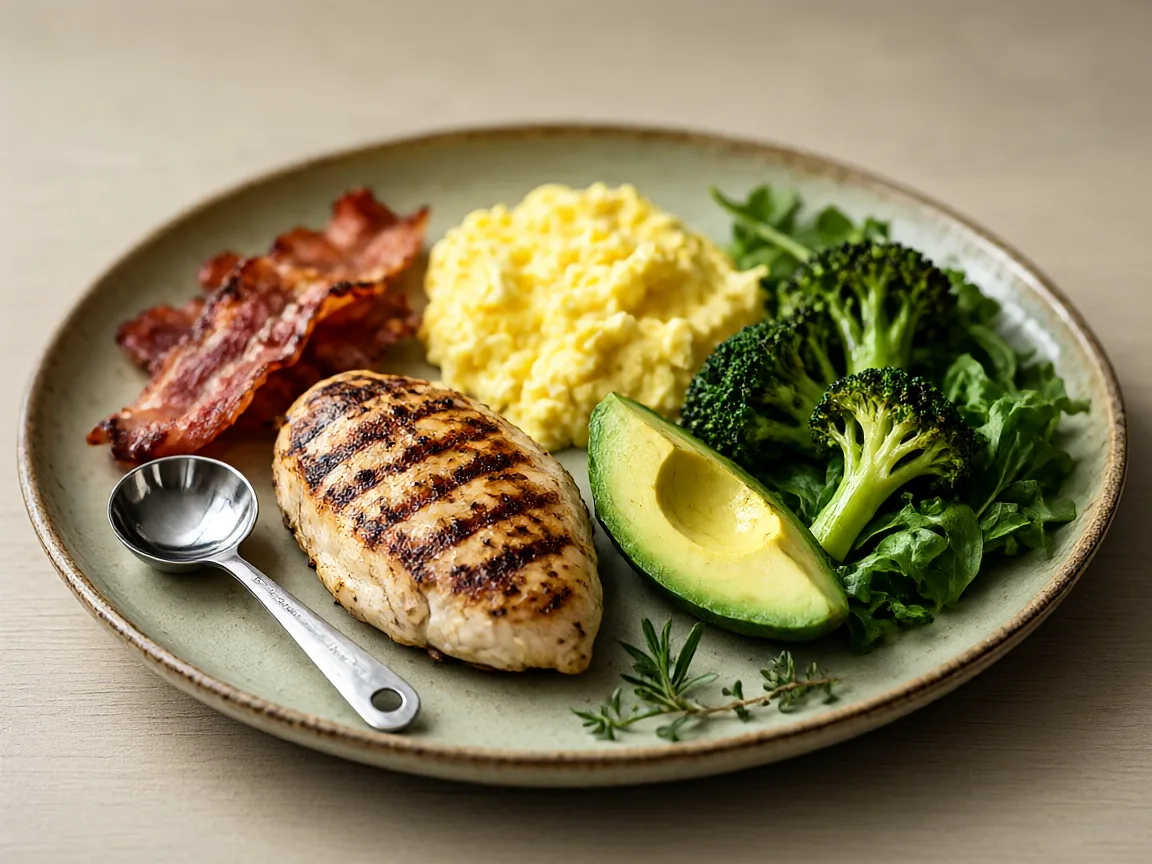
- Choose a protein: eggs, chicken, fish, shrimp, lean beef, tofu, or another suitable option.
- Add non-starchy vegetables: greens, broccoli, cauliflower, cabbage, mushrooms, zucchini, cucumber, or asparagus.
- Use bacon for flavor: crumble a measured portion over the meal instead of building the dish around several slices.
- Add one main fat source: bacon fat, olive oil, avocado, cheese, or a creamy sauce, not necessarily all of them.
- Finish with freshness: lemon, vinegar, herbs, chili, pickles, or a measured low-sugar dressing.
This formula can produce a salad, breakfast skillet, soup, lettuce cup, or sheet-pan meal. The exact amount of bacon depends on the rest of the plate. If the meal has cheese and eggs, a small crumble may be enough. If the meal is mostly vegetables and lean chicken, bacon can provide a stronger flavor accent.
Breakfast ideas
Bacon, egg, and greens skillet
Cook a small amount of chopped bacon in a skillet and remove it when crisp. Leave only enough rendered fat to coat the pan. Add mushrooms and spinach, then cook until the greens wilt and excess moisture evaporates. Add beaten eggs and stir gently until set. Finish with the reserved bacon, black pepper, and chives.
This method gives bacon a clear role without making it the only ingredient. If you want more volume, add cauliflower rice or a side of cucumber. If you add cheese, use less bacon or omit extra oil so the meal does not become unnecessarily heavy.
Bacon breakfast cups
Line muffin wells with partially cooked bacon and fill them with eggs, broccoli, and herbs. Bake until the eggs are set. Make a batch for several breakfasts, but keep the portions consistent. Reheat gently and add fresh greens or tomatoes at serving time.
Breakfast cups are convenient, but they should not become the only food in the morning. Add a vegetable side or a protein choice that fits your plan. If the bacon is salty, avoid adding salt to the egg mixture.
Avocado and bacon plate
Serve a measured amount of bacon with eggs, leafy greens, and a portion of avocado. Use lemon or lime to brighten the plate. Because avocado and bacon both provide richness, skip a heavy dressing and let herbs provide flavor. This is an easy meal to portion when each ingredient is placed separately.
For other avocado combinations, see the low-carb avocado recipes collection. Count the avocado and bacon together if you use both in the same meal.
Lunch ideas
Bacon chicken salad
Combine chopped chicken, lettuce, cucumber, a small portion of tomato, and crumbled bacon. Make a dressing with lemon, mustard, olive oil, and pepper. Add the dressing close to serving time. Use enough bacon to provide smoke and crunch, but let chicken and vegetables provide most of the volume.
If you prefer a creamy dressing, blend a small amount of avocado or plain yogurt with lemon instead of using a large amount of mayonnaise. The result is still rich enough to coat the salad but easier to portion.
Bacon lettuce cups
Fill butter lettuce leaves with cooked ground beef or turkey, chopped bacon, cucumber, scallions, and herbs. A lime and vinegar dressing adds brightness. Keep the filling fairly dry so the leaves stay crisp. Serve several small cups with a vegetable side rather than adding a large amount of sauce.
For an Asian-style version, use ginger, garlic, a measured amount of tamari, and chili. The low-carb Asian recipes collection offers more vegetable and sauce combinations that work with the same lettuce-cup method.
Bacon cauliflower soup
Cook bacon, remove it, and use a small amount of the rendered fat to sauté celery, a modest amount of onion, and cauliflower. Add unsalted broth and simmer until soft. Blend the soup, then add a measured splash of cream or unsweetened coconut milk. Use the bacon as a topping instead of simmering all of it in the pot.
Blending cauliflower provides thickness without flour or potato. Taste before adding salt because the bacon and broth may already provide enough. Lemon juice, thyme, and black pepper can make the soup taste brighter without adding sugar.
Dinner ideas
Bacon-wrapped vegetables
Wrap a half strip of bacon around asparagus, green beans, or a small bundle of zucchini. Roast until the vegetable is tender and the bacon is browned. Use a hot oven and leave space between bundles so moisture can escape. Serve with fish, chicken, or eggs.
The vegetable should remain visible and plentiful. A bacon-wrapped side is a flavor preparation, not a reason to reduce the vegetable portion. Add lemon or vinegar after cooking to balance the richness.
Bacon cabbage skillet
Cook chopped bacon and set it aside. Add sliced cabbage and mushrooms to the pan, then stir-fry until tender. Add garlic, ginger, pepper, and a splash of vinegar. Return the bacon at the end. This dish can accompany pork, chicken, shrimp, or tofu and usually needs little additional oil.
If you use tamari or soy sauce, measure it. Bacon and tamari can make a dish salty quickly. For more heat, use chili flakes or fresh chili rather than a sweet bottled sauce.
Bacon salmon salad
Serve roasted salmon over greens with cucumber, radish, a small amount of bacon, and lemon herb dressing. Salmon and bacon are both flavorful, so keep the dressing simple. Add capers or dill if you want a sharper profile. A portion of roasted broccoli can make the plate more filling without another rich topping.
For a different cooking approach, compare the salmon and vegetable methods in the air fryer low-carb recipes collection. Add bacon after air frying when possible so it does not soften the crisp surfaces of other foods.
Portion planning
Choose your bacon portion before adding cheese, oil, avocado, cream, or nuts. If you use bacon as the main flavoring, a modest amount may be enough for several servings. Weighing cooked bacon can be more consistent than counting slices because thickness and shrinkage vary.
When building a plate, let vegetables occupy a substantial portion of the meal and choose a protein that suits your appetite. Bacon can be the seasoning, while eggs, chicken, fish, shrimp, or tofu provide most of the protein. If your meal contains a high-fat protein, use less bacon or choose a leaner side.
For weight management, remember that low carbohydrate and low calorie are not the same. Bacon, cheese, butter, avocado, and mayonnaise can all fit a low-carb pattern but add energy rapidly when combined. Track the full meal rather than evaluating a single ingredient.
If you are managing blood pressure, cholesterol, blood glucose, or another condition, use your clinician’s guidance. A general low-carb framework should not replace individualized medical advice.
Cooking fat and sodium
Bacon can render enough fat to cook vegetables, but you may not need all of it. Pour off excess fat carefully and keep only a thin coating in the pan. If the dish contains avocado, cheese, or a creamy sauce, use less rendered fat. This preserves flavor without making every bite greasy.
Salt the food only after tasting. Bacon, broth, cheese, pickles, tamari, and prepared mustard can all contribute sodium. Acid, herbs, garlic, pepper, and chili can add interest without more salt. If you are reducing sodium, compare products and choose unsalted ingredients for the rest of the recipe.
Substitutions
Turkey bacon, ham, prosciutto, and pancetta can replace bacon, but the texture and nutrition will change. Some have more sodium or added sugar. Smoked mushrooms, tempeh bacon, toasted seeds, and smoked paprika can provide a non-meat alternative. Check labels and adjust the cooking time.
If you want a crisp topping, use chopped nuts or seeds instead of bacon. Almond meal can also add texture to some vegetable or protein dishes. The low-carb almond meal recipes collection offers more ways to use that ingredient, but measure it because it is energy-dense.
Storage and meal preparation
Cook bacon in a batch and store it separately from wet ingredients. It can be crumbled into eggs, salads, soups, and vegetables during the week. Keep it chilled in a sealed container and reheat only the amount you need. A toaster oven or skillet usually restores more crispness than a long microwave cycle.
Prepare vegetables and proteins in advance, but keep bacon as a final topping when possible. This keeps the texture better and makes it easier to change the flavor of each meal. For salads, pack bacon in a small separate container. For soup, add it to the bowl after reheating.
Freeze cooked bacon in small portions if you will use it in crumbles. Thaw or reheat only what you need. Do not leave cooked bacon or prepared meals at room temperature for long periods.
Common mistakes and fixes
- Building the meal around bacon alone: add vegetables and a defined protein so the plate is more balanced.
- Adding salt automatically: taste after bacon, broth, cheese, and sauces are combined.
- Using every rich ingredient: choose bacon, cheese, avocado, or creamy dressing as the main richness rather than piling all of them together.
- Making vegetables greasy: drain rendered fat and use only enough to coat the pan.
- Soft bacon in salads: store it separately and add it just before eating.
- Unexpected carbohydrate: check for sugar in flavored bacon, sauces, dressings, and cured meat substitutes.
The most repeatable plan is one that is easy to measure. Keep a few favorite recipes, use a consistent bacon product, and record the amount used per serving. Change herbs, vegetables, and proteins for variety without changing the basic portion structure.
How bacon fits a low-carb routine
A bacon low carb diet approach is more sustainable when bacon is one option among many. Use it in two or three meals during the week, then rotate with fish, chicken, eggs, tofu, or lean meat. This keeps the flavor interesting and makes it easier to respond to your sodium, fat, and energy needs.
The low-carb recipes hub can help you plan vegetable-rich meals around the same structure. A practical plate might include a small bacon accent, a palm-sized protein, two kinds of non-starchy vegetables, and a fresh or acidic finish.
FAQ
Can bacon be part of a low-carb diet?
Plain bacon can fit many low-carb plans because it contains little carbohydrate, but the portion, sodium, saturated fat, and added ingredients still matter. Use it as a measured accent rather than an unlimited staple.
How often should I eat bacon?
There is no universal schedule. Rotate bacon with other protein and flavor sources, and follow any individual guidance you have for sodium, saturated fat, or processed meat.
Is bacon good for weight loss?
Bacon alone does not cause weight loss. It can add flavor to a portion-controlled meal, but its energy density means that the full plate matters. Pair it with vegetables and a suitable protein, and track the amount.
What is the best bacon for keto?
Choose a product whose carbohydrate, sodium, and ingredient list fit your goals. Plain or lightly seasoned bacon is easier to use than a sweetened glaze, but compare labels because products vary.
Can I use bacon fat for cooking?
Yes, a small amount can flavor vegetables or eggs. Strain and store it safely, and count it as a fat source. You usually do not need to add oil as well.
Bacon low carb diet meals work best when the bacon brings flavor and texture while vegetables and a defined protein create the foundation. Read labels, choose a consistent portion, watch sodium, and balance rich ingredients with fresh or acidic finishes. With those habits, bacon can fit a varied lower-carbohydrate routine without becoming the only thing on the plate.