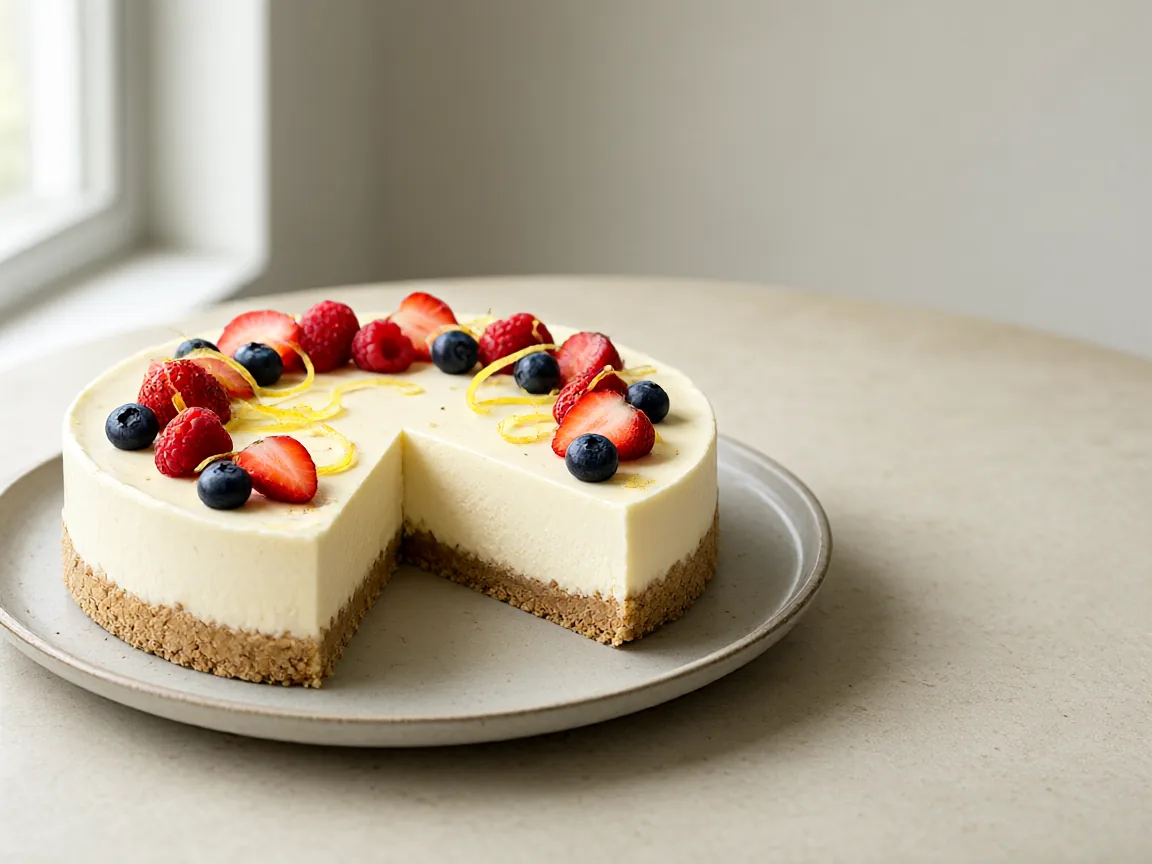
This no bake low carb cheesecake is a chilled dessert with a creamy center, a lightly nutty crust, and enough structure to slice cleanly after resting in the refrigerator. It is designed for kitchens where you want a dessert without turning on the oven. The filling sets through the combination of softened cream cheese, whipped cream, and gelatin, while the almond-flour crust gives each slice a pleasant contrast without relying on a cookie crumb made from wheat flour or added sugar.
The recipe is deliberately practical. It explains how to avoid a lumpy filling, how to choose a sweetener, how to make a firm or softer set, and how to plan toppings without turning a low-carb serving into an unpredictable sugar load. For more ideas in the same collection, browse the low-carb recipe hub. This cheesecake can be made the day before serving, so it works well for a family meal, a weekend dessert, or a make-ahead portioned treat.
Why a no-bake low-carb cheesecake sets
A baked cheesecake firms as eggs coagulate in the oven. A no-bake version needs a different structure. Here, room-temperature cream cheese provides body, whipped cream adds air, and a small amount of bloomed gelatin helps the slices hold their shape. The crust is pressed separately and chilled until firm. Because there is no baking step to dry the filling, accurate measuring and sufficient chilling time matter more than they do in a baked recipe.
The finished dessert should be creamy rather than rubbery. Gelatin is not intended to make a hard jelly; it simply gives the filling enough support to stand on a plate. If you prefer a softer spoon dessert, reduce the gelatin slightly and serve it in small glasses instead of cutting slices. If you want neat slices for a gathering, use the full amount listed below and chill overnight.
Ingredients for an 8-inch cheesecake
For the almond crust
- 1 1/2 cups finely ground blanched almond flour, about 168 g
- 3 tablespoons unsalted butter, melted
- 2 tablespoons powdered allulose or another powdered low-carb sweetener
- 1/4 teaspoon fine salt
- 1/2 teaspoon vanilla extract, optional
For the filling
- 16 ounces full-fat cream cheese, softened and cut into cubes
- 1/3 to 1/2 cup powdered allulose, adjusted to taste
- 1 teaspoon vanilla extract
- 1 tablespoon fresh lemon juice
- 1 cup cold heavy whipping cream
- 1 1/2 teaspoons unflavored powdered gelatin
- 3 tablespoons cool water for blooming the gelatin
For topping, use a few fresh berries, unsweetened coconut, shaved dark chocolate with a suitable label, chopped pecans, or a small amount of lemon zest. Toppings are optional, and they affect the final carbohydrate total. If you use a different sweetener, read the package information because granulated products can contain fillers that change both sweetness and texture.
Choose the pan and prepare the crust
An 8-inch springform pan gives the most attractive slices, but a deep pie plate also works if you plan to serve the cheesecake with a spoon. Line the base of a springform pan with parchment and lightly grease the sides. If using a pie plate, press a strip of parchment around the edge so the first slice releases more easily. The crust is thin by design; a thicker crust can become difficult to cut when chilled.
Stir the almond flour, powdered sweetener, salt, and vanilla together. Pour in the melted butter and mix until the texture resembles damp sand. Squeeze a small amount between your fingers: it should hold together without feeling oily. If it is very dry, add another teaspoon of melted butter. If it seems greasy, add a tablespoon of almond flour and mix again.
Press the mixture firmly over the base of the pan. Use the flat bottom of a glass or measuring cup to create an even layer, especially around the edge. Compacting the crust prevents loose crumbs from mixing into the filling. Refrigerate it for at least 20 minutes while you prepare the cheesecake mixture. A short freeze of 10 minutes is also fine, but do not leave the uncovered crust in the freezer long enough to collect frost.
Make the smooth filling
- Soften the cream cheese. Let the cream cheese sit at room temperature for about 45–60 minutes. It should press easily with a spatula but should not be warm or liquid. Cold cream cheese is the most common cause of lumps.
- Bloom the gelatin. Sprinkle the gelatin over the cool water in a small heatproof bowl. Let it stand for five minutes. The powder will absorb the water and form a thick sponge-like mixture.
- Beat the base. Use a hand mixer on low to medium speed to beat the cream cheese, powdered sweetener, vanilla, and lemon juice until smooth. Scrape the sides of the bowl so no dense cream cheese remains underneath.
- Dissolve the gelatin. Warm the bloomed gelatin in short microwave bursts or over a pan of barely simmering water. Stir until clear and liquid, but do not boil it. Boiling can weaken the setting effect.
- Temper the gelatin. Stir one or two spoonfuls of the cream cheese mixture into the warm gelatin, then pour that blend back into the bowl while mixing on low. This step helps prevent thin gelatin strands from setting in one place.
- Whip the cream separately. In a cold bowl, whip the heavy cream to soft peaks. The whisk should leave a line, but the cream should still look smooth and flexible rather than grainy.
- Fold gently. Fold the whipped cream into the cream cheese mixture in two or three additions. Stop as soon as no white streaks remain. Overmixing removes the air that gives the filling a light texture.
Fill, chill, and slice
Spoon the filling over the chilled crust and spread the top with an offset spatula. Tap the pan lightly on the counter once or twice to release large air pockets. Do not bang it repeatedly, because that can flatten the whipped cream. Cover the pan without letting plastic wrap touch the surface and refrigerate for at least six hours. Overnight is better when you need especially clean slices.
To release the cheesecake, run a thin knife warmed under hot water around the edge, wiping the blade between passes. Unlock the springform ring and transfer the cheesecake to a plate. Use a long, sharp knife warmed and dried before each cut. Serve chilled. If the cheesecake has been frozen, let it thaw in the refrigerator rather than at room temperature so condensation does not soften the crust.
Sweetener choices and how they change the texture
Powdered allulose gives a smooth filling and tends to remain softer when cold. Powdered erythritol can work, but it may create a cooling sensation or tiny crystals after several hours. A monk fruit or stevia blend can also be used if it is intended for a one-to-one replacement, but concentrated drops should be added carefully because they contribute sweetness without adding bulk. If the sweetener has a strong aftertaste, the lemon juice and vanilla can help balance it, but they will not completely hide an unsuitable blend.
Sweetness is easier to adjust before folding in the whipped cream. Taste the cream cheese base and remember that cold desserts taste slightly less sweet than room-temperature mixtures. Add a small amount at a time and allow powdered sweetener to dissolve before tasting again. Avoid using a large quantity of liquid sweetener unless you also reduce another liquid, because extra water can soften the set.
Flavor variations
Lemon cheesecake: Increase the lemon zest and use lemon juice in the filling. Keep the juice measured because too much acid can thin the mixture. Add the zest with the cream cheese so it disperses evenly.
Chocolate cheesecake: Sift two tablespoons of unsweetened cocoa powder into the cream cheese base. Cocoa absorbs moisture, so the filling may need an additional tablespoon of cream. Top with a few curls of unsweetened or low-sugar dark chocolate after chilling.
Berry swirl: Crush a small quantity of raspberries with a fork and strain out excess liquid. Drop tiny spoonfuls over the filling and swirl once with a skewer. Do not add a watery fruit puree in a large amount, because it can create streaks that never set firmly.
Peanut butter: Stir natural unsweetened peanut butter into the cream cheese base. Choose a smooth product without added sugar and reduce the powdered sweetener only after tasting. Peanut butter adds density, so fold the whipped cream carefully.
Coconut lime: Add finely grated lime zest and a tablespoon or two of unsweetened shredded coconut. Toasted coconut is best sprinkled on top at serving so it stays crisp instead of absorbing moisture overnight.
Lower-carb crust alternatives
The almond crust is convenient, but it is not the only option. A pecan crust has a deeper flavor and a slightly softer bite. Pulse pecans with butter, sweetener, and salt until the mixture resembles coarse crumbs, then press it into the pan. Coconut flakes can be added to almond flour, but use them sparingly because large flakes make the base harder to compact. For more ideas using the same ingredient family, compare these low-carb almond meal recipes before choosing a crust texture.
You can also make the cheesecake crustless. Line the bottom of the pan with parchment, pour the filling directly into it, and chill until set. A crustless version is easier to portion in glasses and is useful when you want to focus on the creamy filling. If you prefer a bread-and-dessert comparison, the site’s keto almond-meal bread guide explains how almond-based ingredients behave in a baked mixture rather than a chilled one.
How to troubleshoot the filling
Lumps in the cream cheese: The cream cheese was probably too cold or the sweetener was added before it could blend. Stop the mixer, scrape the bowl, and continue on low speed. Do not pour in hot gelatin to solve lumps; the temperature difference can make the mixture uneven.
Filling is too soft: Give it more time in the refrigerator before changing anything. If it remains soft after an overnight chill, the gelatin may not have dissolved fully, the whipped cream may have been underwhipped, or too much liquid flavoring may have been added. For the next batch, measure the water and gelatin precisely and use soft peaks rather than loose cream.
Filling is rubbery: Too much gelatin or boiling the gelatin can create a firm, bouncy texture. Use level teaspoons, bloom the powder properly, and warm it only until liquid. Folding the whipped cream gently also helps prevent a dense result.
Crust falls apart: Press it more firmly and chill it longer before adding the filling. If the crust still crumbles, increase the butter by one teaspoon or use a slightly finer almond flour. Do not add a large amount of butter at once because the base can become greasy when chilled.
Water on the surface: Condensation can form when a cold cheesecake is uncovered in a humid kitchen. Keep it covered while chilling and uncover it shortly before serving. Watery fruit toppings are another common cause, so add fresh berries at the table when possible.
Storage and make-ahead planning
Keep the cheesecake covered in the refrigerator for up to four days. Store toppings separately if they contain moisture, especially berries or sauces. Individual slices can be placed in airtight containers, which makes portion planning simple and reduces the need to handle the whole cake repeatedly.
For longer storage, freeze slices on a parchment-lined tray until firm, then wrap them individually and place them in a freezer container. Thaw overnight in the refrigerator. The crust may be slightly softer after freezing, but the filling should remain creamy if it was well set before freezing. Avoid repeated thawing and refreezing because the texture will become grainy and the crust may separate.
Serving ideas
Serve a small slice with coffee, unsweetened tea, or a spoonful of lightly whipped cream. A few berries provide color and acidity, while toasted nuts add crunch. If the dessert is part of a larger meal, keep the garnish simple and let the cheesecake provide the richness. Slices are easier to serve when the knife is cleaned and rewarmed between cuts.
For a casual dessert table, make the filling in small glasses over a spoonful of crust. Refrigerate the glasses for at least three hours and add toppings just before serving. This presentation avoids the pressure of cutting perfect slices and makes it easier to provide different toppings without changing the base recipe.
Nutrition and portion notes
Nutrition varies with the cream cheese, butter, almond flour, sweetener, and toppings you choose. Almond flour and dairy make this a rich dessert even though the recipe is low in carbohydrates compared with a conventional cheesecake. To calculate a useful estimate, enter each package label into a recipe calculator, include the crust and garnish, and divide by the number of portions actually served. Eight narrow slices will have a different profile from six generous slices.
Low-carb does not mean unlimited. Treat the cheesecake as a planned dessert and pair it with the portion size that fits your eating pattern. If you have a medical reason to monitor carbohydrates or specific ingredients, check the labels and seek individualized guidance from a qualified professional.
Frequently asked questions
Can I make this without gelatin?
Yes, but it will be softer and more dependent on properly whipped cream. Make it in a pie dish or serving glasses, chill it overnight, and avoid transporting it in warm conditions. A gelatin-free version is best served with a spoon rather than promised as a firm slice.
Can I use a food processor for the crust?
A food processor is useful for mixing the dry crust ingredients, but pulse briefly after adding the melted butter. Overprocessing can release oil from the nuts and make the crust heavy. Press the mixture into the pan by hand so you can feel whether it is compact enough.
Why does my cheesecake taste less sweet when cold?
Cold temperatures reduce the perception of sweetness. Taste the cream cheese base before adding the whipped cream, then remember that the finished chilled dessert will be a little more restrained. Add sweetener gradually rather than making a large adjustment after the cake is already set.
Can I use a ready-made low-carb crust?
You can, provided it fits the pan and its label matches your needs. Check whether it contains added sugar, wheat, or a sweetener you avoid. A ready-made crust saves time, but it may be sweeter or thicker than the homemade crust in this recipe.
Is an air fryer useful for this dessert?
The cheesecake itself does not need an air fryer because it is chilled, not baked. An air fryer can toast nuts or coconut for the topping. For savory uses of the appliance, see the air fryer low-carb recipe collection.
Final checklist for a clean slice
Soften the cream cheese fully, use powdered sweetener, bloom and gently dissolve the gelatin, and whip the cream only to soft peaks. Press the crust firmly, chill the filled pan for at least six hours, and warm the knife before each cut. Add wet toppings near serving time and keep the dessert cold until it reaches the table. These small steps make this no bake low carb cheesecake consistent enough for advance preparation while preserving the smooth, creamy texture that makes a chilled cheesecake worth making.
Once the basic version is familiar, experiment with lemon, cocoa, berries, or toasted nuts one at a time. Recording the sweetener brand and the number of portions helps you repeat the result and calculate nutrition more accurately. The recipe is flexible, but the setting process is not: measured liquid, a properly bloomed binder, and adequate chilling are the foundation of every successful batch.