Bake to Be Fit keto caramel is a rich, buttery sauce made for low-carb baking and everyday desserts. It has the familiar color and deep toasted flavor of caramel, but it is built without table sugar. The key is to treat the sweetener, butter, cream, and heat as a system: the sweetener supplies bulk and sweetness, the butter adds body, the cream smooths the sauce, and a careful simmer develops flavor without burning the milk solids.
This recipe makes a small jar that can be spooned over cheesecake, stirred into coffee, layered between cookies, or used as a filling for a low-carb bar. It includes a thermometer-free method and visual cues, along with options for a thicker drizzle, a softer spread, or a salted version. If you are planning a full menu rather than one dessert, the low-carb recipe hub has more breakfast, baking, and snack ideas.
What makes keto caramel different?
Traditional caramel is made by heating sugar until it melts and browns, then adding butter or cream. Sugar behaves predictably as it changes color and develops caramelized notes. Low-carb sweeteners do not all melt or brown in the same way. Allulose is especially useful because it dissolves smoothly and can take on a light amber color. Erythritol can crystallize as it cools, and some blends contain bulking ingredients that change the consistency. For that reason, the recipe below uses powdered allulose as the most forgiving starting point.
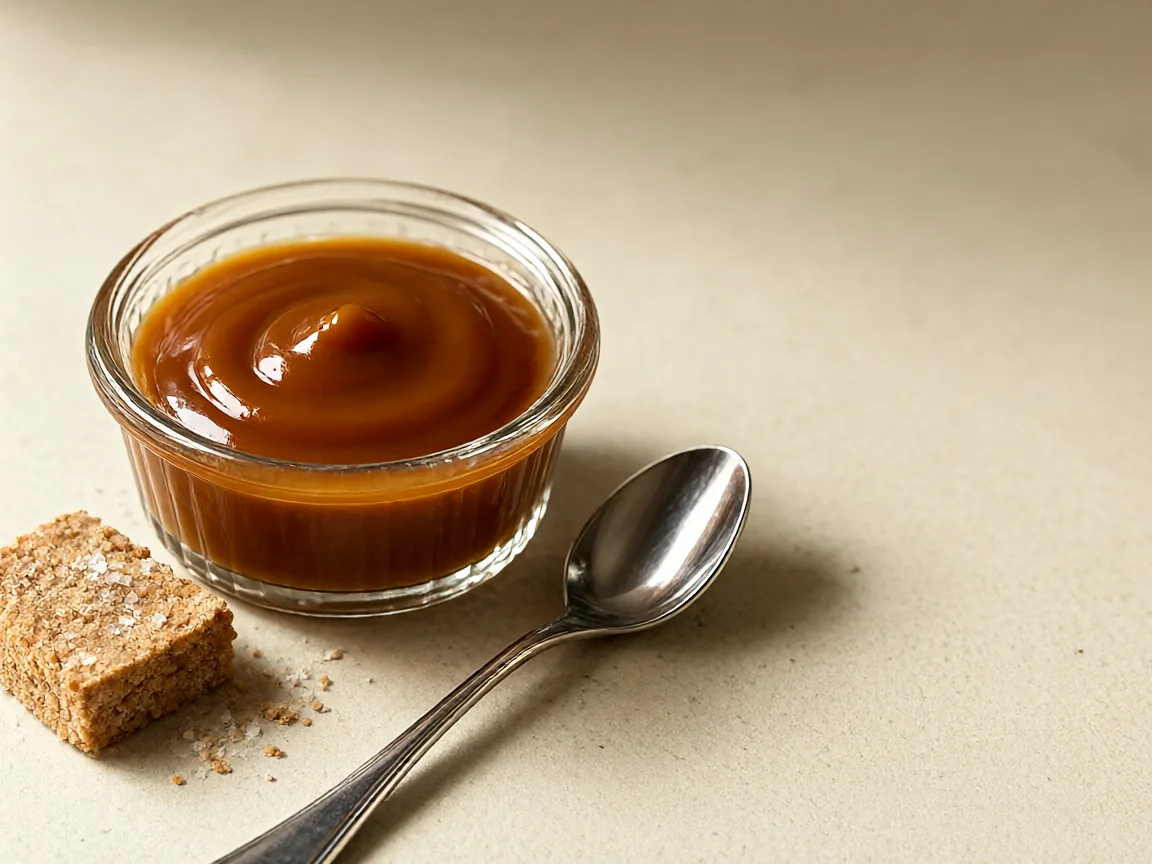
The result should be glossy and pourable when warm, slightly thicker at room temperature, and spoonable after refrigeration. It will not behave exactly like a corn-syrup caramel. That difference is helpful to understand before you begin: the goal is a versatile low-carb caramel sauce with a clean, buttery finish, not a promise that every sweetener will produce the same stretch or chew as melted sugar.
Ingredients for one small jar
- 1/2 cup powdered allulose, about 85 g
- 4 tablespoons unsalted butter
- 1/3 cup heavy cream, warmed slightly
- 1 teaspoon vanilla extract
- 1/4 teaspoon fine salt, or 1/2 teaspoon flaky salt for salted caramel
- 1/8 teaspoon xanthan gum, optional for a thicker cold sauce
Use a light-colored saucepan if you want to judge the color easily. A small whisk, silicone spatula, heatproof jar, and measuring spoons are also useful. Keep the warm cream close to the stove before you begin. Adding cold cream to hot butter and sweetener can cause vigorous bubbling and makes it harder to control the mixture.
Before you cook
Measure every ingredient first. Caramel changes quickly at the end, so stopping to weigh the cream can result in overcooking. Warm the cream in a small pan or microwave until it is just warm to the touch, not boiling. If you plan to use xanthan gum, whisk it into the powdered allulose before it reaches the saucepan. This distributes the gum and reduces the chance of clumps.
Choose a burner that allows gentle control. High heat is rarely useful for this recipe because allulose can darken quickly and butter can separate. If your cooktop runs hot, use a heavy-bottomed saucepan or move the pan on and off the burner as needed. Have a bowl of cool water nearby in case you need to stop the cooking quickly, but do not pour water into the hot caramel.
How to make Bake to Be Fit keto caramel
- Combine the sweetener. Put the powdered allulose and optional xanthan gum in the saucepan. Break up any visible lumps. If you are using a sweetener blend rather than allulose, check whether it is already powdered and whether it contains a bulking ingredient.
- Add the butter. Cut the butter into pieces and add it to the pan. Heat over medium-low, stirring steadily, until the butter melts and the sweetener becomes a smooth, thick syrup.
- Develop the color. Continue cooking for two to four minutes, stirring or swirling the pan. Look for a pale honey color and a toasted aroma. Do not wait for a very dark brown color; low-carb sweeteners can go from lightly colored to bitter faster than expected.
- Add the warm cream. Remove the pan from the burner and slowly pour in the warm cream while whisking. The sauce will bubble. Keep your face and hands away from the steam and use a long-handled utensil.
- Return to low heat. Put the pan back over low heat and whisk until the sauce looks uniform. Simmer for two to five minutes, stirring often, until it coats the back of a spoon.
- Finish the flavor. Turn off the heat and stir in the vanilla and salt. Let the sauce stand for five minutes, then transfer it to a heatproof jar.
Do not judge the final thickness while the sauce is still steaming hot. It will thicken as it cools, and a sauce that seems slightly loose in the pan may become spreadable after an hour in the refrigerator. If it is too thick for your intended use, whisk in a teaspoon of warm cream. If it is too thin, return it to low heat and reduce it in short intervals rather than boiling it aggressively.
Visual cues for each stage
At the beginning, the mixture looks pale and grainy as the sweetener meets the butter. As the butter melts, it becomes glossy and more fluid. When it is ready for the cream, it should smell lightly toasted and have the color of pale honey. After the cream is added, the sauce may look separated for a moment. Keep whisking over low heat and it should come back together.
The finished sauce should leave a clean line when you drag a spatula across the bottom of the pan. A spoon dipped into it should have a thin coating rather than a watery film. Avoid cooking until it resembles a thick candy because it may become hard or grainy when cold. The correct endpoint depends on how you plan to use it: a drizzle needs to stay fluid, while a cake filling can be reduced a little longer.
How to use the caramel in low-carb baking
Drizzle warm caramel over a slice of no-bake cheesecake, stir a spoonful into whipped cream, or use it as a finishing layer on almond-flour brownies. It also works with roasted pecans, sliced strawberries, plain Greek yogurt, or a small scoop of a low-sugar frozen dessert. For a breakfast application, swirl a teaspoon into chia pudding or spread a thin layer on a low-carb toast substitute.
When using caramel inside a baked recipe, cool it first. Warm sauce can soften a dough, dissolve a sweetener coating, or leak through a pastry edge. Chilled caramel is easier to portion between layers of cookies or roll into a bar mixture. If you are exploring almond-based baking, compare the texture notes in these keto almond-meal bread recipes; the same attention to moisture balance helps keep a caramel-filled bake from becoming soggy.
Flavor variations
Flaky salted caramel: Use 1/2 teaspoon of flaky salt in the sauce or sprinkle a small amount over the jar after cooling. Salt sharpens the toasted flavor, so add it gradually and taste after the sauce has cooled slightly.
Espresso caramel: Stir in 1/2 teaspoon of instant espresso powder with the vanilla. This adds bitterness and depth without making the sauce taste strongly like coffee. It is especially good with chocolate desserts.
Cinnamon pecan caramel: Add 1/4 teaspoon of cinnamon and fold in finely chopped toasted pecans after the sauce has cooled. Keep the nuts out of the hot pan so they retain a little crunch.
Chocolate caramel: Whisk in 1 tablespoon of unsweetened cocoa powder after the cream has been incorporated. Sift the cocoa first to prevent clumps. The sauce will become thicker and slightly darker, so use low heat and stir constantly.
Orange vanilla caramel: Add a small amount of finely grated orange zest with the vanilla. The zest gives aroma without adding the liquid that can thin the sauce. Use only the colored outer layer of the peel, not the bitter white pith.
Sweetener substitutions
Powdered allulose is the most reliable option for a smooth sauce, but it may not be available everywhere. A powdered monk-fruit-and-allulose blend can usually be used in a similar amount, although sweetness varies by brand. Erythritol can work for a pourable sauce, but expect a higher chance of crystals as it cools. If using erythritol, serve the sauce warm or blend it briefly while warm to improve the texture.
Concentrated liquid stevia or sucralose does not provide the same bulk as powdered sweetener, so it cannot simply replace allulose by volume. You would need to adjust the butter and cream, and the finished sauce may be thinner. Read the label of any blend for maltodextrin, dextrose, or other fillers if you are counting carbohydrates closely. The quantity used matters as much as the brand name.
Dairy-free and nut-free considerations
For a dairy-free version, use a plant-based butter that browns and emulsifies well, along with a thick unsweetened cream alternative. Results vary widely because some products contain more water or starch than dairy cream. Make a half batch first and avoid adding all of the cream until you can see how the mixture comes together. If you are comparing ingredient choices across desserts, these low-carb almond meal recipes offer additional ways to use a nut-based baking base with controlled moisture.
The caramel itself can be made without nuts, but the desserts served with it may not be. If you are making a nut-free topping, use toasted pumpkin or sunflower seeds instead of pecans. Keep the preparation surface separate from nut-based ingredients and read labels for cross-contact information when serving someone with an allergy.
Troubleshooting a separated sauce
Butter pooling on top: The heat may have been too high, or the cream was added too quickly. Whisk the sauce over low heat for one to two minutes. If it remains separated, add one teaspoon of warm cream while whisking. Avoid adding cold liquid, which can shock the emulsion.
Grainy texture: Erythritol crystals are the most common cause, but undissolved sweetener can also create grit. Use powdered sweetener, keep the heat moderate, and avoid scraping dry crystals from the sides of the pan into the sauce. A smooth sauce may still become slightly grainy after refrigeration with erythritol.
Bitter flavor: The sweetener was likely over-browned, or the milk solids in the butter scorched. Start with a lighter color next time and use lower heat. A pinch of salt and vanilla can balance a lightly bitter batch, but a burnt sauce is best discarded.
Too thin after cooling: Rewarm it gently and reduce for another minute or two. Cool a teaspoon on a plate to test the texture before reducing the whole jar for a long time. A tiny amount of xanthan gum can also add body, but it must be whisked in thoroughly to prevent a slimy texture.
Too thick or hard: Warm the jar in a bowl of hot water and stir in a teaspoon of warm cream. Never microwave a sealed jar. If the texture is still firm, use the sauce as a filling or chop it into a low-carb cookie mixture rather than forcing it to become a thin drizzle.
Storage and reheating
Transfer the cooled sauce to a clean, airtight jar and refrigerate it for up to one week. Use a dry, clean spoon each time. Because this sauce contains dairy, do not leave it at room temperature for an extended period. A thin layer of butter on top is not automatically a problem; stir it back in while the sauce is gently warmed.
To reheat, place the jar in a bowl of hot water or warm the sauce in a small saucepan over low heat. Stir frequently and add a few drops of cream if needed. If you are making a larger dessert, warm only the portion you plan to use so the main jar is not repeatedly heated and cooled.
Nutrition and portion planning
The nutrition of keto caramel depends on the butter, cream, sweetener, and serving size. Allulose and some monk-fruit blends contribute little or no usable carbohydrate, but labels and local nutrition rules can differ. For an accurate estimate, record the exact brands and divide the finished weight into measured portions. One tablespoon can be very different from an unmeasured pour over a dessert.
Caramel is concentrated, even when it is low in sugar. Use a small spoonful to add flavor to a larger dessert rather than treating the sauce as the entire serving. If you are following a medically prescribed carbohydrate plan or avoiding a specific sweetener, review the ingredient labels and seek individualized advice from a qualified professional.
Frequently asked questions
Can I make this caramel without a thermometer?
Yes. The recipe uses color, aroma, bubbling, and spoon-coating as visual cues. A thermometer can add consistency, but it is not required for a sauce that is cooked gently and used as a drizzle or filling.
Can I use granulated allulose?
Granulated allulose will dissolve, but powdered allulose incorporates faster and is less likely to leave undissolved grains. If granulated is all you have, cook over low heat and allow extra time for the crystals to disappear before judging the sauce.
Why did the caramel become hard in the refrigerator?
Butter firms when cold, and some sweeteners crystallize as they cool. Warm the sauce gently and stir in a small amount of cream. For a softer refrigerated texture next time, use allulose and stop cooking as soon as the sauce coats a spoon.
Can I bake the caramel directly into a cake?
It is safer to cool the caramel first and use it as a thin layer or swirl. A large amount of liquid caramel can sink, create wet spots, or make the center of a cake underbake. Start with a tested batter and a small amount of sauce.
Does an air fryer work with keto caramel desserts?
The sauce itself is made on the stovetop, but it can finish an air-fried dessert such as toasted almond-flour bites or baked fruit. Add it after cooking so the sugars and butter do not scorch. For more appliance-based meal ideas, see these air fryer low-carb recipes.
Serving combinations
Try warm caramel over the chilled no-bake cheesecake in the recipe collection, or use a teaspoon to finish a bowl of plain Greek yogurt with chopped nuts. It can also be layered with whipped cream in a glass, spread between two low-carb cookies, or spooned over a small almond-flour cake. If the dessert already contains butter and cream cheese, keep the caramel portion modest so the final plate feels balanced.
For a simple caramel coffee, stir one teaspoon into hot coffee and add a splash of cream. Whisking the sauce into the hot liquid helps it disperse. For a cold drink, dissolve the caramel in a small amount of hot coffee first, then pour over ice. This prevents chilled liquid from leaving streaks of sauce at the bottom of the glass.
Final tips for repeatable results
Use powdered allulose when possible, warm the cream before adding it, and keep the pan over medium-low or low heat. Watch the color rather than waiting for a dark brown syrup. Finish with vanilla and salt off the heat, and let the sauce cool before deciding whether it needs more body. If you are using the caramel in a baked project, chill it first and add it in a measured layer.
Bake to Be Fit keto caramel becomes easier after one or two small batches because you learn how your pan and burner handle heat. Keep notes about the sweetener brand, cooking time, and final texture. That small record makes it simple to adjust the sauce for a drizzle, filling, or refrigerated spread while keeping the recipe aligned with your low-carb baking plan.