Low carb apple cider is best understood as an apple-spiced drink rather than a traditional glass of pressed apple juice. Regular cider is naturally concentrated in sugar, so a standard serving can use a large part of a low-carb or keto carbohydrate budget. A lower-carb version creates the familiar warm flavor with unsweetened tea, apple-style aroma, spices, citrus peel, and a small measured amount of apple when it fits the plan.
This approach is useful when you want an autumn drink without treating it like a free food. The final carbohydrate depends on the ingredients and the serving size, so the recipe below is designed to be adjusted. It explains how to build the flavor, which ingredients add sweetness or aroma, how to avoid a watery result, and how to serve the drink safely and consistently.
What makes traditional apple cider high in carbohydrate?
Apple cider is usually made by pressing apples and concentrating their juice. The liquid contains the natural sugars from many apples but very little of the fiber that would have been present in the whole fruit. That is why a mug of cider can taste sweet and full-bodied even when no extra sugar has been added.
For a lower-carb drink, the goal is not to reproduce every gram of apple juice. Instead, build the sensory cues that people associate with cider: warm spice, gentle acidity, orange peel, apple aroma, and a rounded body. Using a small amount of unsweetened tea as the base gives the drink enough volume without making the entire mug depend on fruit sugar.
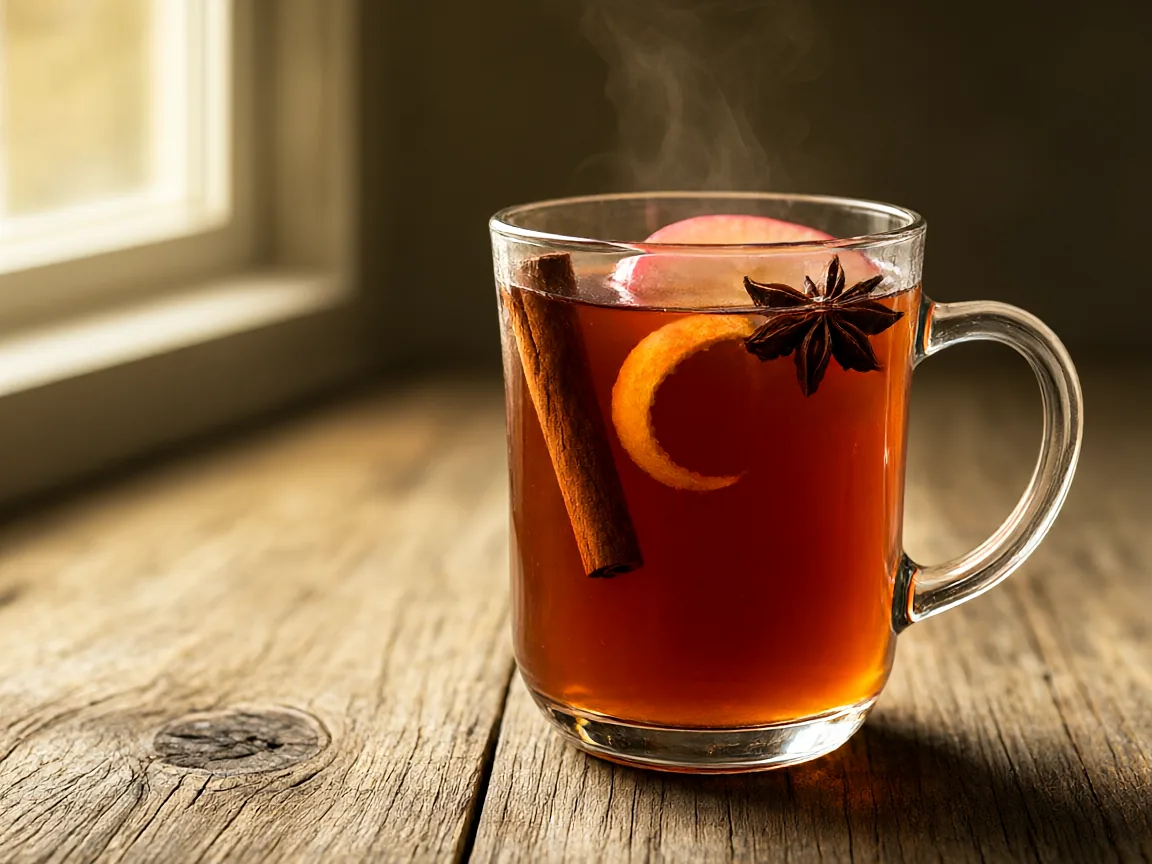
Ingredients for a low-carb spiced cider-style drink
- 3 cups unsweetened black tea, rooibos, or herbal tea
- 1/2 cup unsweetened apple-flavored sparkling water or plain water
- 2 thin strips of orange peel, with as little white pith as possible
- 1 cinnamon stick
- 2 whole cloves
- 1 small piece of star anise, optional
- 1 tablespoon lemon juice
- 1/4 teaspoon alcohol-free vanilla extract, optional
- Low-sugar sweetener to taste, added gradually
- Optional garnish: one thin apple slice or a twist of orange peel
Rooibos makes a naturally caffeine-free base with a warm color. Black tea gives more tannin and a deeper flavor, but it can become bitter if boiled for too long. Herbal tea can work well when it has a mild, neutral flavor. Choose an apple-flavored sparkling water only if the label shows no added sugar and the flavor does not contain a syrup or juice concentrate.
How to make the drink
1. Prepare the tea base
Brew the tea according to its package directions, but keep the flavor moderately strong because it will be diluted slightly. Pour the hot tea into a saucepan. Do not start with boiling water in a thin pan and leave it unattended; gentle heat gives you more control over the spices and keeps the drink from reducing too quickly.
2. Add the spices and peel
Add the cinnamon stick, cloves, star anise if using, and orange peel. Warm the mixture over low heat for 10 to 15 minutes. The liquid should steam lightly without a rolling boil. A gentle infusion extracts aroma while reducing the chance of bitter tea or harsh clove flavor.
3. Balance the flavor
Remove the pan from the heat and stir in lemon juice. Add vanilla if you want a rounder dessert-like note. Taste before adding sweetener. The citrus and spice should be noticeable, while the base should not taste like plain tea. Add a small amount of your chosen sweetener, stir, and taste again. Sweetness can become stronger as the drink cools, so avoid adding a large amount at once.
4. Finish and serve
Strain the drink into mugs. Add a small amount of unsweetened apple-flavored sparkling water after the mixture has cooled slightly if you want a brighter aroma, but do not add carbonated water to a vigorously boiling pan. Garnish with a very thin apple slice only if it fits your carbohydrate target. One small garnish is different from using apple juice as the main liquid.
How to create a stronger apple impression
Apple flavor is often more about aroma than sweetness. Orange peel, cinnamon, vanilla, and a small amount of acid can make the drink seem fruitier without adding much carbohydrate. A tiny pinch of ground allspice can add a baked-apple note, while ginger gives the drink a brighter finish. Add spices gradually because clove, star anise, and allspice can quickly dominate.
If you want to use real apple, use a measured amount rather than pouring in juice. Simmer a few thin apple slices in the tea base for several minutes, then remove them before serving. This will add some natural sugar, so include the apple in your calculation. A single thin slice for aroma will have a different impact from half an apple or a cup of cider.
Some sugar-free apple flavorings can taste artificial or contain carriers that change the nutrition label. Read the ingredients and test a small amount. The flavoring should support the spices, not replace every other part of the drink.
Sweetener choices and portion control
Use the sweetener that fits your own eating plan and that you tolerate well. Erythritol blends, stevia blends, and allulose can each behave differently in a hot drink. Start with a small amount because hot liquid can make sweetness seem stronger. If the drink has too much sweetener, add more unsweetened tea rather than trying to correct it with extra lemon.
A measured mug is easier to track than a large insulated cup. Decide whether the recipe makes three or four servings, then pour equal amounts. If you add cream, whipped cream, sweetened syrup, or a flavored topping, count those ingredients separately. A low-carb base can become a high-sugar drink through toppings even when the original recipe contains no sugar.
For people who manage diabetes or follow a medically prescribed diet, beverage carbohydrate can be easy to overlook because a drink may not feel like food. Check the label for any juice, concentrate, or sweetened flavoring and follow your clinician’s guidance when making dietary changes.
Three variations that stay focused on the same goal
Ginger-orange version
Add two thin slices of fresh ginger with the cinnamon and orange peel. This version is sharper and works well without much sweetener. Strain the ginger before serving. If you use ground ginger, add only a pinch because it can make the drink cloudy and intense.
Vanilla-cinnamon version
Use rooibos tea, cinnamon, orange peel, and a small amount of vanilla. This creates a softer, dessert-like profile that pairs well with a small low-carb cookie. Keep the cookie portion separate from the drink calculation. An almond-based treat such as these keto almond flour cookies can work as a planned accompaniment when its ingredients fit your target.
Mulled tea version
Use black tea, cinnamon, cloves, lemon peel, and a few crushed cardamom pods. This version is less apple-forward and more like a warm spiced tea, but it can satisfy the same seasonal craving with a lower-sugar base. Strain the spices carefully before serving.
What to serve with low carb apple cider
Pair the drink with a food that offers protein or a planned portion of fat rather than adding several sweet foods. A small serving of plain Greek yogurt with cinnamon, a few nuts, or a savory breakfast can balance the drink. If you want a baked item, keep the serving visible and use the recipe’s nutrition estimate rather than guessing from the word “keto.”
For a more substantial meal, the cider-style drink can sit beside a low-carb breakfast or lunch. The drink itself does not provide much protein, so it should not be treated as a complete meal replacement. If caffeine matters to you, choose rooibos or a caffeine-free herbal base later in the day.
Storage, reheating, and food safety
Let leftover cider-style drink cool promptly and transfer it to a clean covered container. Refrigerate it and use it within three days. Remove the spices and peel before storage if the flavor is already strong, because cloves and star anise continue to infuse and can make the drink harsh.
Reheat one serving gently on the stove or in the microwave. Do not boil repeatedly, especially if the base contains tea, because the flavor can become bitter and the liquid can reduce unpredictably. If you used fresh apple slices, strain them before refrigerating. Discard the drink if it develops an off smell, unusual cloudiness, or other signs of spoilage.
Common mistakes and fixes
- The drink tastes like tea: brew the base a little stronger, add citrus peel, and allow the spices more infusion time.
- The drink tastes bitter: reduce the tea strength, avoid boiling, and use fewer cloves or less orange pith.
- The apple flavor is weak: use an unsweetened apple-flavored water or a measured apple slice, then rebalance with cinnamon and lemon.
- The drink is too sweet: dilute it with unsweetened tea or water and add a small amount of acid.
- The spices are overpowering: strain them earlier and use a smaller quantity in the next batch.
Make a half batch when testing a new tea, flavoring, or sweetener. The same spice amount can taste very different in a strong black tea and a mild herbal infusion. Record the brand and serving size so the successful version can be repeated.
How it fits a low-carb recipe collection
This drink belongs in a low-carb recipe collection as a seasonal beverage idea, not as a claim that all apple products are low in carbohydrate. Use the main low-carb recipes hub to pair it with meals that have clear ingredients and portions. If you are planning an almond-based snack, these low-carb almond meal recipes offer another way to add texture without relying on a sugary pastry.
For a baked option using a similar pantry ingredient, compare the drink with an almond flour keto recipe. Keeping the beverage and food portions separate makes the total meal easier to estimate and adjust.
FAQ
Can I drink regular apple cider on keto?
Regular cider may contain enough natural sugar to use a significant part of a strict carbohydrate budget. Check the serving size and nutrition label. A cider-style tea made without juice gives you more control, but you should still count any apple, sweetener, or topping used.
Does apple cider vinegar make this the same as apple cider?
No. Apple cider vinegar is acidic and is not a substitute for the flavor or volume of apple cider. It may be used in other recipes, but adding it to a warm beverage will not reproduce a sweet apple taste.
Can I use apple juice in a low-carb version?
You can use a small measured amount if it fits your personal plan, but apple juice is concentrated in natural sugar. Treat it as an ingredient rather than the base, and calculate the full recipe before serving.
Which tea is best for low carb apple cider?
Rooibos is caffeine-free and naturally warm in flavor. Black tea provides more depth but can turn bitter if over-brewed. A mild herbal tea works when you want the spices and citrus to be the main flavor.
Can I serve it cold?
Yes. Strain and chill the drink, then serve it over ice with an orange peel. Cold temperatures can reduce the perception of sweetness, so taste it before adding more sweetener.
A low carb apple cider-style drink works when you build the flavor with spices and aroma instead of treating apple juice as a free base. Use unsweetened tea, measure any real apple or flavoring, keep the serving moderate, and count toppings. The result is a warm seasonal option that can fit a thoughtful low-carb meal plan without pretending that traditional cider has no sugar.