A low carb sushi recipe replaces most or all of the usual rice with a lower-starch base while keeping the useful parts of sushi: a small portion, clean flavors, a contrast of textures, and a filling built around seafood, eggs, tofu, or vegetables. Cauliflower rice is the easiest starting point, but it must be cooked briefly and dried well so the rolls do not become wet. You can make hand rolls, bowls, or simple sliced rolls without trying to reproduce restaurant sushi exactly.
This guide is general food and cooking information. Raw fish requires careful sourcing, cold storage, and safe handling, so use cooked seafood or vegetables if you cannot verify freshness and temperature control. People with allergies, pregnancy-related food restrictions, or other personal safety needs should follow qualified guidance and choose fully cooked fillings when appropriate.
Quick answer: what is the best low-carb sushi base?
For a rollable base, pulse raw cauliflower into rice-sized pieces, cook it briefly, squeeze out steam and water, and mix it with rice vinegar and a small amount of cream cheese or mashed avocado for binding. Spread a thin layer over a nori sheet, leave a clean edge, add a modest filling, and roll firmly. If rolling is frustrating, use the same components in a bowl or lettuce cup; the flavor and portion logic still work.
Ingredients for two servings
- 3 cups cauliflower rice, fresh or thawed and well drained
- 2 nori sheets
- 1 tablespoon rice vinegar, checked for added sugar
- 1 tablespoon cream cheese, mashed avocado, or a small amount of mayonnaise for binding
- 4 ounces cooked salmon, cooked shrimp, canned tuna, smoked salmon, or pressed tofu
- 1/2 cucumber cut into thin strips
- 1/2 avocado cut into thin slices
- 1 teaspoon toasted sesame seeds
- Optional: scallions, pickled ginger, wasabi, tamari, or a measured spicy mayonnaise
Use a clean bamboo mat, parchment, or a sheet of plastic wrap to help with rolling. If you choose raw fish, buy it from a reputable source that can explain its handling and suitability for raw consumption. When in doubt, choose cooked seafood. Check tamari, mayonnaise, vinegar, and seasoning labels because sugar and sodium differ between products.
Prepare the cauliflower rice base
- Pulse or drain. If using a whole cauliflower, pulse florets until they resemble small rice grains. If using frozen cauliflower rice, thaw and drain it thoroughly.
- Cook briefly. Microwave or sauté the cauliflower just until tender, usually two to four minutes depending on the amount. Avoid cooking it until soft and wet.
- Remove moisture. Spread it on a clean towel or use a fine strainer, then press gently. Steam is the main reason low-carb sushi falls apart.
- Season and bind. Stir in rice vinegar and the cream cheese, mashed avocado, or mayonnaise. Taste before adding salt because nori and tamari already bring seasoning.
- Cool completely. Warm cauliflower can soften nori quickly. Let the mixture cool to room temperature or chill it briefly before assembly.
How to assemble simple rolls
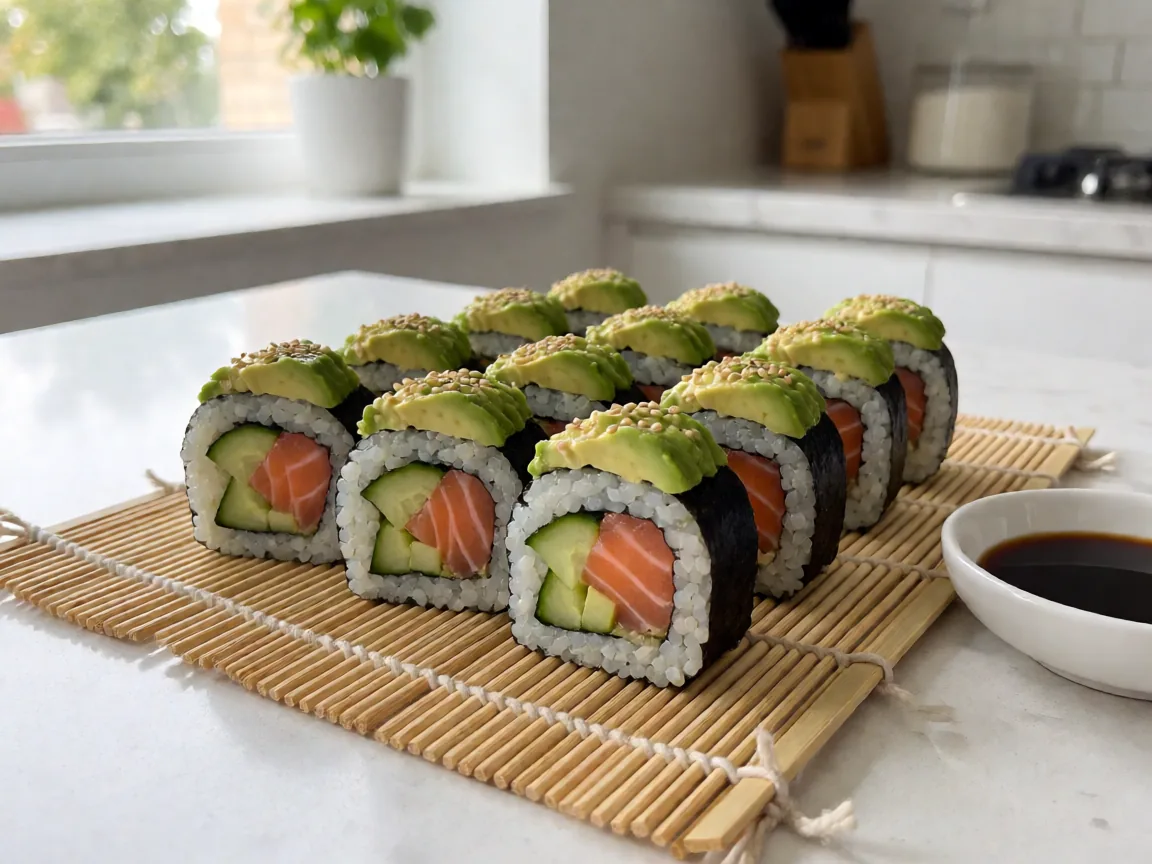
- Place a nori sheet shiny-side down on the mat. Keep the edge closest to you aligned with the mat.
- Spread half of the cooled cauliflower mixture over the lower two-thirds of the sheet. Keep the layer thin; a thick layer cracks when rolled.
- Arrange a narrow line of filling across the lower third. Use less than you think you need at first. Cucumber, avocado, and cooked salmon provide a useful soft-and-crisp contrast.
- Lift the near edge of the mat over the filling and press gently to form the first turn. Continue rolling while keeping even pressure, then dampen the far edge of the nori to seal.
- Rest the roll seam-side down for a minute, then cut it with a sharp damp knife. Wipe the blade between cuts so the pieces stay clean.
If the roll splits, do not add more filling immediately. The base may be too wet, the layer too thick, or the nori too soft. Turn the same ingredients into hand rolls or a bowl instead of wasting them. A low-carb meal should be adaptable to the equipment and time you actually have.
Filling combinations that stay practical
Cooked salmon and cucumber: use flaked salmon, cucumber, scallion, and a small amount of mayonnaise or yogurt. This is mild, easy to portion, and suitable when raw fish handling is not desirable.
Shrimp and avocado: use chilled cooked shrimp, avocado, cucumber, and sesame. Pat the shrimp dry before slicing so excess water does not loosen the roll.
Tofu and vegetables: press firm tofu, pan-sear it with tamari, then pair it with cucumber, avocado, or lightly cooked asparagus. This option works well for readers who prefer a plant-forward filling, but confirm that the seasoning fits the rest of the meal.
Egg and vegetable: make a thin omelet, cool it, and cut it into strips with cucumber and scallions. It is inexpensive, fully cooked, and useful for meal prep. For more ingredient-led ideas, visit the ingredient guides.
Bowls and lettuce cups when rolling is not useful
A sushi bowl is often the most reliable format. Put the cooled cauliflower base in a bowl, add one protein, two vegetables, sesame, and a measured sauce. Keep crunchy or wet toppings separate until serving. Lettuce cups follow the same structure and are easier to carry than delicate slices. If you are looking for a broader set of meal ideas, the Recipes section gives the same ingredient-and-method context in other formats.
Substitutions and carbohydrate context
Shredded cabbage can replace some of the cauliflower base, but it remains more fibrous and less sticky. Finely chopped cucumber is refreshing but too wet to serve as the main base. Hearts of palm can create a rice-like bite when chopped, while a thin egg sheet can replace nori for a different texture. Change one component at a time so you can identify which substitution affects firmness.
Low-carb does not mean carbohydrate-free. Cauliflower, avocado, sauces, vegetables, and any sweetened vinegar all contribute different amounts. Use the labels of the products you actually purchase and divide the finished recipe into the servings you actually prepare. If carbohydrate precision matters for your personal care, a qualified professional can help you interpret the meal in context.
Food safety and storage
Keep seafood, cooked rice substitutes, and prepared fillings chilled. Work with clean hands, boards, knives, and mats. If using raw fish, follow current local guidance and the supplier’s handling instructions; do not use smell or appearance alone as a safety test. When serving a group, keep the platter cold and return leftovers to refrigeration promptly.
For best texture, assemble just before eating. You can prepare the cauliflower base, cooked fillings, and cut vegetables ahead, but store them separately in sealed containers. Use a cold pack for transport. Nori becomes chewy when exposed to moisture, so keep sheets dry until assembly and keep sauces in a separate container. Discard food that has been held outside safe temperature limits rather than trying to rescue it by reheating.
Serving and portion ideas
Two nori sheets can make two moderate servings, depending on the amount of filling. Serve with cucumber, greens, or a simple vegetable side instead of adding several rich sauces. A small amount of tamari or spicy mayonnaise can add flavor without turning the dipping bowl into the main part of the meal. If you need more food, add another clearly portioned protein or vegetable side rather than repeatedly adding sauce to a small roll.
Frequently asked questions
Can I make low-carb sushi without cauliflower?
Yes. Use lettuce cups, a thin egg sheet, chopped hearts of palm, or a bowl with vegetables as the base. The main goal is to keep the filling balanced and the moisture controlled, not to copy the exact texture of sticky rice.
Why does my nori become soggy?
The filling or cauliflower base contains too much moisture, or the rolls were assembled too far in advance. Drain the base thoroughly, pat seafood and vegetables dry, use a thinner layer, and assemble closer to serving time.
Is cooked seafood easier for meal prep?
Usually. Cooked salmon, shrimp, tuna, tofu, and egg are easier to portion and handle than raw fish. Store the components separately, keep them chilled, and follow current food-safety guidance for the ingredients you use.
Final checklist
Dry the cauliflower, keep the base thin, choose a modest filling, assemble close to serving, and use cooked seafood when raw-fish safety is uncertain. The most useful low carb sushi recipe is the version that fits your kitchen, your storage setup, and your comfort with the ingredients. For the limits of general food guidance, read the site’s Disclaimer before adapting the meal to a personal medical or dietary plan.
A simple assembly plan for a busy day
When time is limited, prepare the base and fillings as separate components the night before. Portion the cauliflower mixture into one container, place the cooked protein and vegetables in another, and keep nori, sauces, and sesame dry until serving. This protects the texture and makes it easier to build a bowl, hand roll, or a small plate based on how much time you have. If the meal will travel, use a chilled insulated bag and keep the components cold. Assemble only the portion you plan to eat so the remaining nori stays crisp and the filling is not repeatedly exposed to room temperature.