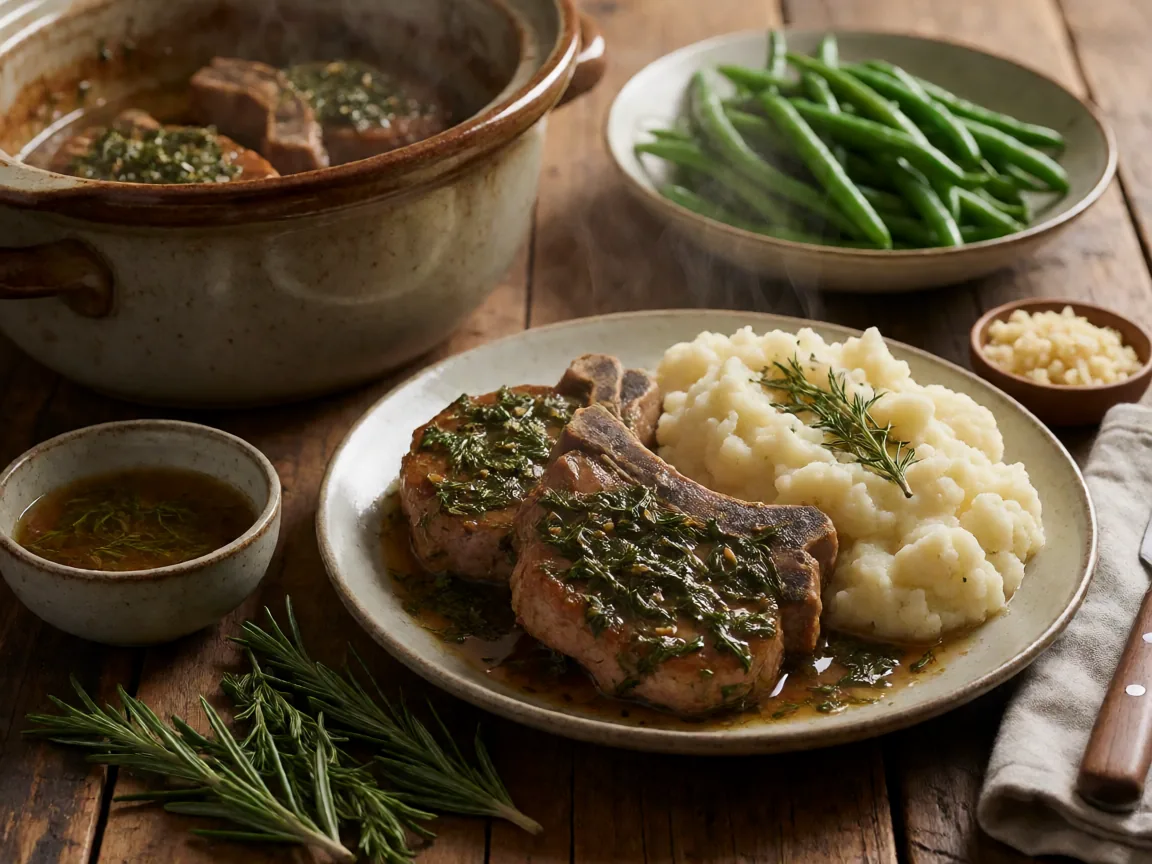
Keto pork chops in a crock pot can be tender and satisfying when the slow cooker is used to protect moisture rather than to turn the meat into a soup. Choose bone-in or thick-cut chops when possible, add a low-sugar cooking liquid, and finish with a short uncovered rest so the sauce clings to the meat. The method below pairs the chops with cauliflower mash and green beans for a practical low-carb dinner.
This is general cooking information, not individualized medical advice. Pork thickness, slow-cooker temperature, and local food-safety guidance vary, so use a reliable thermometer and follow the instructions for your equipment. The safest target is the current safe internal temperature recommended by your local food-safety authority, measured in the thickest part of the meat without touching bone.
Quick answer: how do you keep crock-pot pork chops tender?
Use chops that are not paper-thin, season them before cooking, add just enough liquid to create a moist environment, and avoid cooking them far beyond the point of doneness. A simple base uses four pork chops, unsweetened broth, Dijon mustard, garlic, thyme, and a small amount of cream or Greek yogurt added after cooking. The sauce should be savory and lightly thickened, not sweet or flour-heavy.
Ingredients for four servings
- 4 pork loin or shoulder chops, about 1 to 1 1/2 inches thick
- 1 teaspoon kosher salt, adjusted for the saltiness of the broth
- 1/2 teaspoon black pepper
- 1 teaspoon paprika
- 1 tablespoon olive oil for browning, optional
- 1 cup unsalted or low-sodium chicken broth
- 1 tablespoon Dijon mustard without added sugar
- 3 cloves garlic, minced
- 1 teaspoon dried thyme or 1 tablespoon fresh thyme
- 1/2 cup heavy cream or plain Greek yogurt for finishing
- 1 tablespoon chopped parsley or chives
Serve with cauliflower mash made from one large head of cauliflower, a tablespoon of butter or olive oil, salt, pepper, and a splash of broth. Add steamed or roasted green beans on the side. Read labels on broth, mustard, seasoning blends, and dairy products because sweeteners and starches can vary between brands.
Preparation and slow-cooker method
- Dry and season the chops. Pat the pork dry with paper towels. Mix the salt, pepper, and paprika, then season both sides. Drying improves browning and helps the seasoning stay on the surface.
- Brown if time allows. Heat the oil in a skillet over medium-high heat and brown the chops for about two minutes per side. This step adds color and flavor; it is not meant to cook the pork through. If you skip it, the finished dish will still work but will look paler.
- Build the cooking liquid. Whisk the broth, Dijon mustard, garlic, and thyme. Pour it into the slow cooker and place the chops in a single layer as much as possible.
- Cook gently. Cover and cook on low until the thickest chop reaches a safe internal temperature. The exact timing depends on thickness and the cooker; begin checking earlier than a recipe’s maximum time rather than leaving thin chops on heat all day.
- Finish the sauce. Transfer the chops to a clean plate and rest them. Stir the cream into the hot cooking liquid. If using Greek yogurt, temper it with a few spoonfuls of hot liquid first, then stir it back in off the heat to reduce curdling.
- Serve. Spoon a modest amount of sauce over each chop, add the cauliflower mash and green beans, and finish with herbs. Keep extra sauce separate if you plan to store leftovers.
How to prevent dry or watery results
Dry pork usually comes from overcooking, chops that are too thin for a long slow-cooker cycle, or repeated reheating. Use thicker chops when possible and check temperature early. Watery sauce comes from adding too much broth or from covering a cooker after the meat has already released a lot of liquid. Start with one cup, remove the meat to rest, and reduce the liquid briefly in a saucepan if you want a stronger sauce.
A slow cooker is forgiving about vegetables but less forgiving about lean meat left on heat for many extra hours. Mushrooms, sliced zucchini, or spinach can be added near the end, while sturdy vegetables such as cauliflower can cook separately for better texture. If you want more appliance ideas, browse the appliance methods hub.
Cauliflower mash and side options
Steam the cauliflower until very tender, then drain it thoroughly. Blend or mash it with butter or olive oil, salt, pepper, and a small splash of broth. Excess water is the main reason cauliflower mash becomes loose, so let the cooked florets steam dry for a few minutes before blending. For a more textured side, mash by hand and leave some small pieces intact.
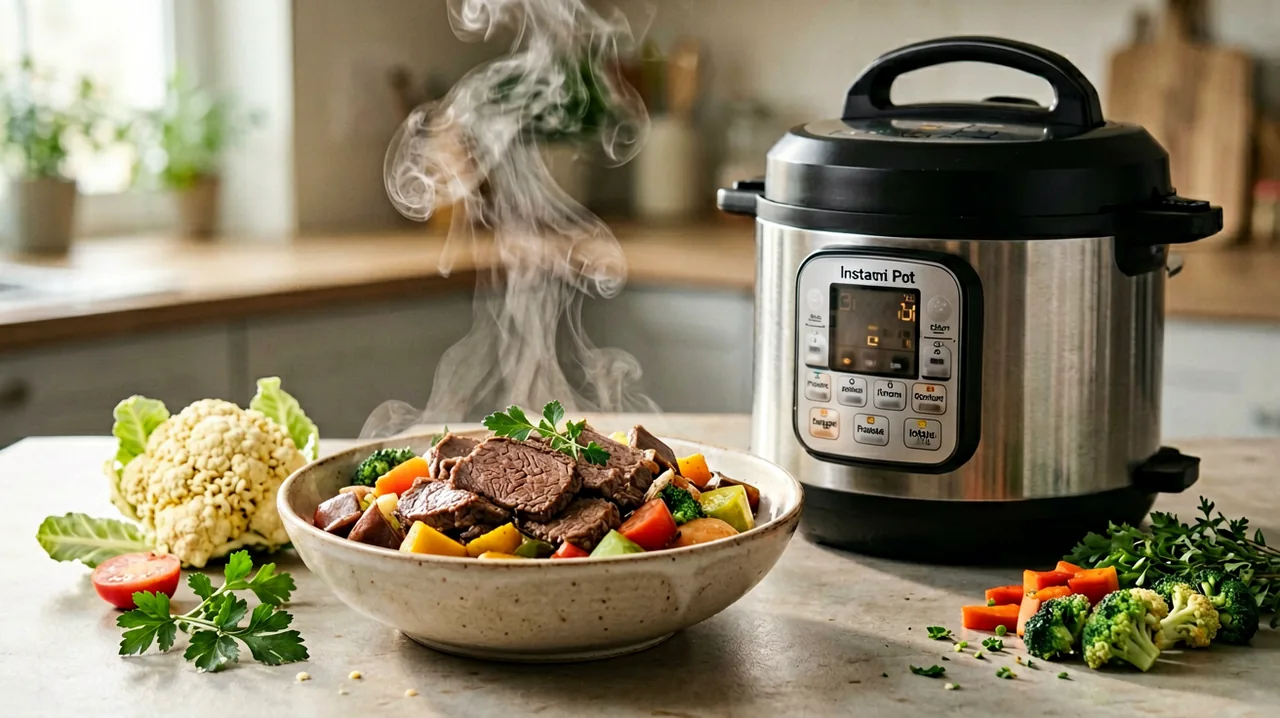
Green beans provide contrast without requiring a complicated second recipe. Steam them until just tender, then season with lemon zest, pepper, and a small amount of butter. You can also use roasted broccoli or sautéed cabbage. The existing Instant Pot low-carb methods offer a different way to prepare a protein and vegetable meal when a slow cooker is not available.
Substitutions that protect the recipe
Bone-in chops bring extra flavor and can tolerate a little more cooking, while boneless loin chops cook faster and need closer monitoring. Chicken broth can replace the cooking liquid, but the flavor will be lighter. For a dairy-free finish, reduce the liquid on its own and whisk in olive oil or a small amount of unsweetened coconut cream; check that the flavor does not become sweet.
Mustard can be replaced with a teaspoon of vinegar plus a pinch of garlic, although the sauce will be sharper. Dried thyme can be swapped for rosemary, sage, or an Italian herb blend without added sugar. Avoid using flour to thicken the sauce if the goal is a low-carb meal; reduction, cream, yogurt, or a small amount of a suitable thickener can each work depending on the texture you want.
Storage, reheating, and meal prep
Cool leftovers promptly in shallow containers and refrigerate them according to current local food-safety guidance. Store the pork, sauce, and cauliflower mash in separate compartments when possible. Reheat gently with a spoonful of sauce or broth and stop as soon as the center is hot. Repeated high-heat reheating dries pork quickly, so portion only what you plan to eat.
For meal prep, prepare the cauliflower mash and green beans while the pork cooks. Label the container with the date and keep a serving-size plan visible. If you freeze the chops, freeze them with some sauce in an airtight container and thaw in the refrigerator before reheating. Do not leave cooked meat at room temperature while deciding whether it still smells acceptable.
Nutrition and portion context
The nutrition of this meal depends on the cut, trimming, broth, cream, and serving size. A reasonable starting plate is one chop, a defined scoop of cauliflower mash, and a generous portion of non-starchy vegetables. Treat estimates from a recipe as approximations unless they are calculated from the exact products and final yield. A low-carb label does not make a recipe appropriate for every person or medical plan.
Frequently asked questions
Can I use thin pork chops?
You can, but they are more likely to overcook during a long slow-cooker cycle. Brown them briefly, use less cooking time, and start checking their temperature early. Thick chops or shoulder-style cuts are usually more forgiving.
Should I add the cream at the beginning?
No. Dairy can separate during a long cooking cycle. Add cream after removing the meat, or temper Greek yogurt with hot liquid and stir it in off the heat. This produces a smoother sauce and gives you more control over thickness.
How can I make the dish less salty?
Use unsalted broth, season the meat lightly, and add salt only after tasting the finished sauce. Serving the pork with unsalted cauliflower and green beans also spreads the flavor across the plate. Do not try to correct a salty sauce by adding large amounts of water; reduce the salt at the ingredient stage instead.
Final checklist
Choose chops with enough thickness, dry and season them, brown when convenient, use only enough broth to create a moist cooking environment, and check doneness instead of relying on the clock. Let the meat rest before adding sauce. With those controls, keto pork chops in a crock pot become a practical weeknight meal rather than an overcooked slow-cooker gamble. For more general recipe ideas, continue through the Recipes hub and compare the method with the site’s air-fryer low-carb recipes.
Timing by chop thickness
Use thickness as a planning guide, not as a substitute for checking the meat. A thin boneless chop may reach a safe temperature quickly and can become dry if left in a slow cooker for several extra hours. A thicker bone-in chop usually gives you a little more protection, but it still needs an early check because cookers vary. If the chops finish before the side dishes, move them to a clean covered plate and keep the cooking liquid warm separately. Resting helps the juices settle; it does not mean the meat should remain at room temperature for an extended period.
For a batch meal, prepare the sauce and vegetables in separate containers so each component can be reheated to its best texture. Add fresh herbs after reheating rather than before storage. If the sauce thickens in the refrigerator, loosen one serving with a teaspoon of broth while warming it gently. This small adjustment keeps the pork moist without requiring a large amount of extra sauce.